By Dr. Amanda Myers, DC, MS · Last updated September 15, 2026
You have heard shockwave therapy works on stubborn problems — plantar fasciitis, tennis elbow, tendons that will not heal. But the name stops people. Something called a shockwave sounds like something you brace for.
So — does shockwave therapy hurt? Here is the honest answer.
Shockwave therapy does not hurt the way the name suggests. Most patients describe it as an intense, rhythmic tapping with a deep ache over the injured spot — uncomfortable, not painful, typically a 3 to 5 out of 10. The intensity is adjustable in real time, each area takes about 5 to 10 minutes, and there is no numbing and no downtime.
What it actually feels like, second by second
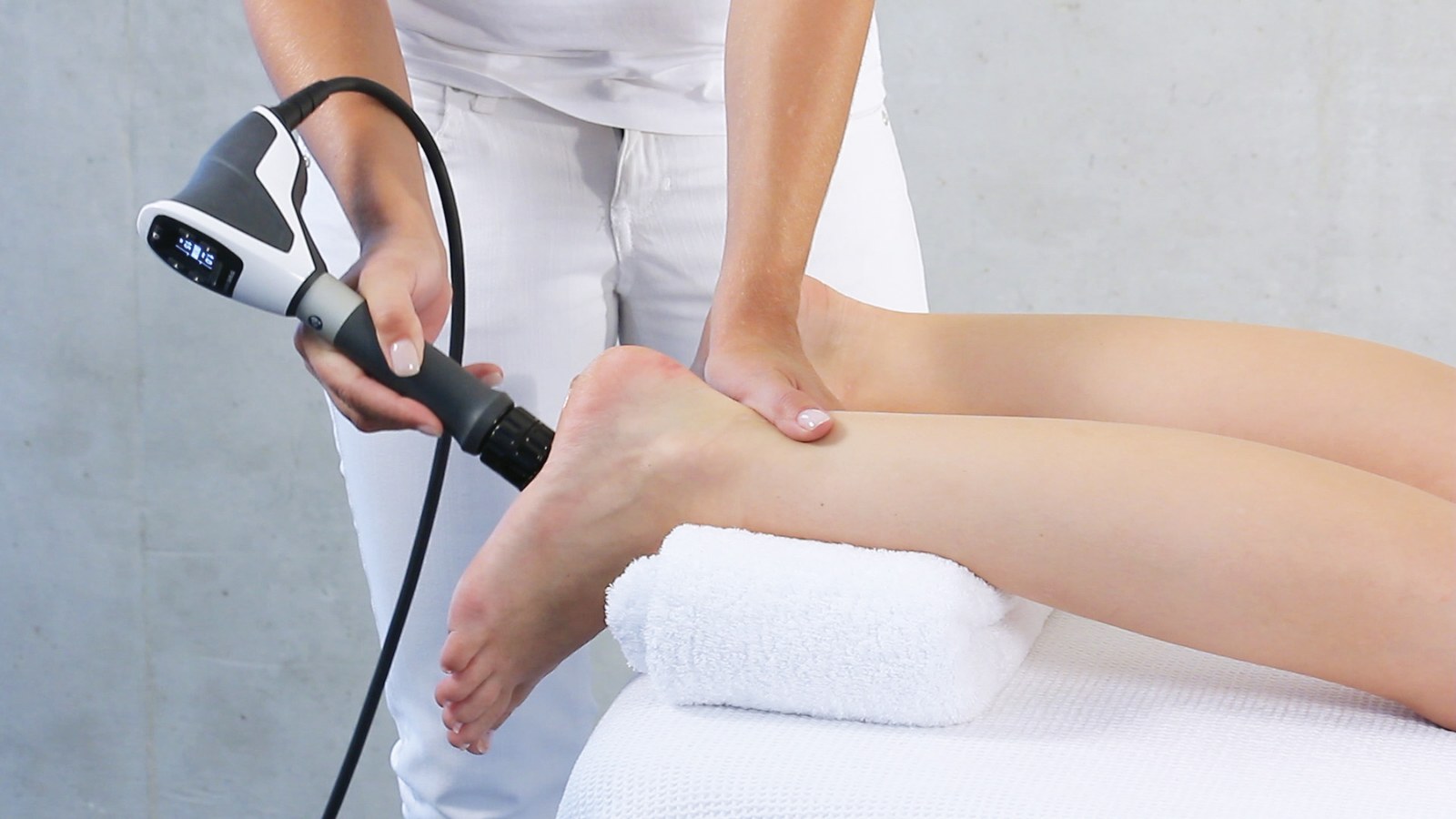
At our Lombard office, shockwave treatment starts with gel on the skin, the same as an ultrasound. Then the handpiece delivers rapid pulses — several per second — into the injured tissue.
The first few seconds feel like a firm, fast tapping. As we move over the damaged spot, you feel a deep, dull ache. That ache is diagnostic gold: healthy tissue barely notices the pulses, while injured tissue talks back. When you say “that’s the spot,” we usually found your problem more precisely than an image could.
You are never gritting your teeth through it. We start at a low intensity and turn it up only as the area gets used to the sensation — and most areas do within the first minute. You talk with us the whole time, and the setting comes down the moment you want it to.
What you will feel, and when
| When | What most patients feel | How long it lasts |
|---|---|---|
| During treatment | Rhythmic tapping with a deep ache over the injured spot, about 3–5 out of 10; intensity adjusted to you | 5–10 minutes per area |
| Right after | Warmth and mild tenderness; the area often feels looser than when you walked in | A few hours |
| 24–48 hours | Soreness like a hard workout; sometimes slight redness or swelling | 1–2 days |
| Day 3 and beyond | Back to baseline, with improvement building week over week as tissue repairs | Ongoing through your plan |
Side effects: what is normal, what is not
Half of the people typing “does shockwave therapy hurt” into Google are really asking about side effects. Shockwave therapy has a short, predictable list of them, and they are mild for most people. Normal responses include temporary redness, warmth, mild swelling, tenderness for a day or two, and occasionally small spots of bruising over bony areas. These are signs your body registered the stimulus — not signs something went wrong.
What is not normal: sharp pain during treatment, numbness or tingling that lingers, or soreness that gets worse after day three instead of better. Those are worth a call, and they are rare. Large studies on shockwave therapy consistently report no serious complications when it is applied by a trained provider to the right condition.
Why the discomfort is part of how it works
This is the piece most clinics skip. Shockwave therapy is not trying to soothe your tissue — it is trying to restart it. Chronic tendon and fascia problems are stalled healing: your body stopped treating the area as injured months ago, even though it never actually repaired. The pulses create a controlled micro-stress that ramps up blood flow and signals your body to send repair cells back to a spot it had given up on.
That is why the deep ache sits exactly over your worst spot, and why the soreness afterward resembles a workout: the tissue is being asked to remodel. A treatment that felt like nothing would be doing close to nothing. This is also not random — we dose it, target it, and space sessions about a week apart so repair outpaces stress.
How we keep it manageable
Comfort during shockwave comes down to technique and communication, not toughness. We use a professional Storz radial shockwave device, start every first session at a low setting, and adjust based on what you tell us — not a preset protocol. Most patients are surprised by their second visit: the same setting that felt intense on day one barely registers once the tissue starts to calm down.
A typical plan runs 3 to 6 sessions, each visit around 15 minutes in and out. There is no anesthetic, no needles, and you drive yourself home and go about your day. If you are weighing it against other options, we also published honest numbers on what shockwave therapy costs and how it performs on chronic tendon pain.
When discomfort is a medical question
A small group of situations call for a physician first, not a comfort conversation: treatment directly over a healing fracture, active infection, or a tumor site; pregnancy when the treatment area is near the abdomen or low back; and blood-clotting disorders or blood-thinning medication, which raise bruising risk. Part of your assessment at True Health is screening for exactly these — and if shockwave is not the right tool for your case, we will tell you and point you to what is.
Frequently asked questions
Does shockwave therapy hurt?
It is uncomfortable, not painful. Most patients rate it 3 to 5 out of 10 — a fast tapping with a deep ache over the injured spot that fades as the area adjusts. The intensity is turned up or down in real time based on your feedback, and each area takes about 5 to 10 minutes.
What are the side effects of shockwave therapy?
The common ones are mild and short-lived: redness, warmth, slight swelling, soreness for one to two days, and occasional small bruises. Serious complications are rare when shockwave is applied by a trained provider to an appropriate condition. Soreness that worsens after day three is not typical and deserves a call.
What should you not do after shockwave therapy?
For 24 to 48 hours, skip high-intensity training on the treated area, ice, and anti-inflammatory medication like ibuprofen unless your provider says otherwise. The treatment works by triggering an inflammatory repair response — icing it or medicating it away blunts the very effect you paid for. Normal daily movement is encouraged.
Who should not have shockwave therapy?
Shockwave is not used over healing fractures, infections, tumors, or a pregnancy-adjacent area, and it needs extra caution with clotting disorders or blood thinners. Severe neuropathy with lost sensation in the area also matters, because your feedback guides the dose. A screening assessment sorts this out before anyone treats you.
How do you feel after shockwave therapy?
Most people walk out feeling warm and a little tender at the spot, and often looser than when they came in. The next day or two can feel like post-workout soreness. Improvement is not instant — tissue remodels over weeks, which is why results typically build across a 3 to 6 session plan.
Wondering whether your heel, elbow, or shoulder is the kind of problem shockwave actually fixes? That is a ten-minute conversation, not a guess. Book your New Patient Discovery Assessment and let’s get to the root of this.