Start Your Health Journey Here – Schedule Your Consultation Today!

You have heard acupuncture can help. Maybe a friend told you about it. Maybe your doctor mentioned it. You are dealing with chronic pain, migraines, anxiety, digestive issues, fertility, fatigue, or something else that has not responded to conventional treatment alone — and you are curious whether this could be the missing piece.

Acupuncture is one of the most thoroughly researched complementary therapies and is part of standard care at True Health. We use it for pain, for systemic and nervous system issues, and for the parts of the clinical picture that chiropractic and rehabilitation alone do not reach. It is not magic. It is a real treatment with real mechanisms — and it works particularly well when integrated into a coordinated plan instead of used in isolation.

What acupuncture actually is

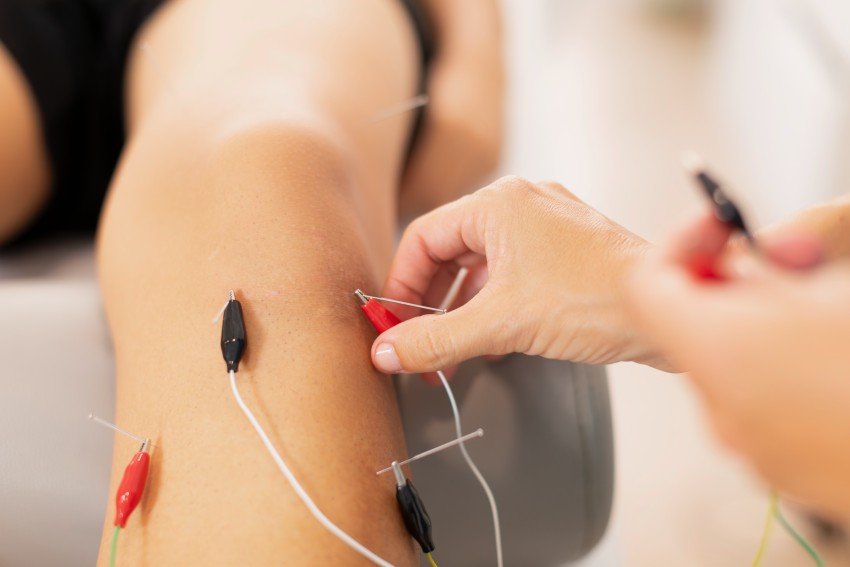
Acupuncture is the precise placement of very thin, sterile, single-use needles into specific points on the body. The needles are about the diameter of a human hair — most patients feel little or no pain on insertion. The needles stay in place for fifteen to thirty minutes while you rest comfortably.

The mechanism: research shows acupuncture stimulates local and central nervous system responses, releases endorphins and other natural pain-modulating chemicals, reduces inflammation, regulates autonomic nervous system function, and improves blood flow to treated areas. There is growing evidence for effects on immune function, hormonal regulation, and brain activity in pain processing centers.

At True Health our acupuncture is performed by licensed practitioners and integrated into the broader care plan when relevant. We use both traditional Chinese medicine frameworks and modern Western medical understanding of what acupuncture does.

What we treat with acupuncture

Acupuncture is well-supported by research for a wide range of conditions. The most common reasons our patients use acupuncture:

What to expect during an acupuncture session

Your first acupuncture visit takes about sixty minutes. The session:

  1. Intake. Detailed history of what brings you in plus a comprehensive review of your health, energy, sleep, digestion, and any patterns that help us identify the right treatment approach.
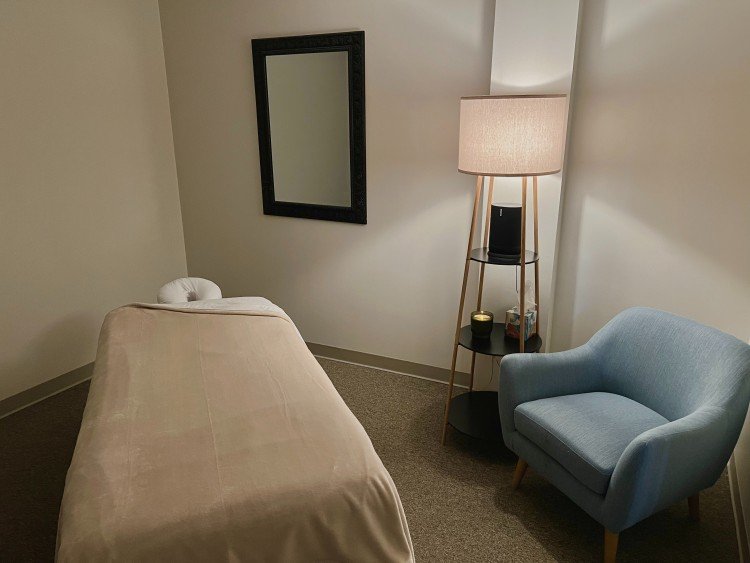
  2. Treatment. You rest comfortably on a treatment table. The practitioner places very thin needles at specific points based on your condition. Most patients feel little or no pain on insertion — sometimes a brief tingling or dull pressure. Once placed, you rest with the needles for fifteen to thirty minutes.
  3. Experience. Most patients find the experience deeply relaxing. Many fall asleep during treatment. You will likely feel calm, light, and well after the session. Some patients notice immediate symptom relief; others see gradual improvement over a course of treatments.
  4. Frequency. Most conditions respond to a course of six to twelve treatments. Acute conditions may need fewer sessions. Chronic conditions or complex cases may need longer treatment plans.

How acupuncture works with chiropractic and rehabilitation

The reason we integrate acupuncture, chiropractic, and rehab at True Health is that most chronic problems have multiple drivers. Chiropractic addresses joint motion and structural restrictions. Rehabilitation rebuilds stability and movement patterns. Acupuncture addresses the pain, the inflammation, the nervous system regulation, and the systemic components that the other tools do not reach.

Running these separately at three different clinics wastes time and money and nobody is talking to each other. We coordinate the entire plan in one place with one care team. That is what makes a real endpoint possible — not just symptom relief, but actual resolution.

Common questions about acupuncture

Does acupuncture actually work or is it placebo?

Acupuncture is one of the most thoroughly researched complementary therapies. Multiple meta-analyses and systematic reviews show acupuncture is effective for chronic pain, migraines, post-operative nausea, chemotherapy-induced nausea, and several other conditions — with effects beyond placebo. The mechanisms are well-documented: release of natural pain-modulating chemicals, modulation of nervous system activity, anti-inflammatory effects, and changes in brain activity in pain processing centers. It is not magic. It is a real treatment with real measurable effects.

Do acupuncture needles hurt?

Most patients feel little or no pain. Acupuncture needles are extremely thin — roughly the diameter of a human hair, far thinner than the needles used for injections or blood draws. Some patients feel nothing at all on insertion. Others feel a brief sensation that is often described as a tingling, a dull pressure, or a sense of heaviness. Once the needles are in place, most people find the experience deeply relaxing. Many patients fall asleep during treatment.

How many acupuncture sessions will I need?

Most conditions respond to a course of six to twelve treatments. Acute conditions like a recent injury may need only a few sessions. Chronic conditions like long-standing pain or complex hormonal issues may need longer treatment plans. We give you a realistic estimate after your first visit based on your specific condition and how you respond. Many patients move to a maintenance phase with periodic sessions after the active treatment course.

Is acupuncture safe?

Yes. Acupuncture performed by a licensed practitioner using sterile, single-use needles has a very strong safety record. The most common side effect is mild bruising at a needle site, which resolves quickly. Serious complications are extremely rare. We screen every new patient for the conditions that would change our approach and modify treatment for pregnancy, anticoagulant medications, and other special situations.

Does insurance cover acupuncture?

Coverage varies by plan. Many major medical plans now cover acupuncture for specific conditions like chronic back pain or migraines. We verify your specific coverage before your first visit so you know exactly what is covered. HSA and FSA payments are accepted. For patients without acupuncture coverage, we offer reasonable self-pay rates and care packages.

Can acupuncture help with conditions other than pain?

Yes — acupuncture is effective for a wide range of conditions beyond pain. The strongest research support beyond pain is for migraines, post-operative and chemotherapy-induced nausea, anxiety, and certain digestive issues. There is also good research support for fertility support, menstrual and hormonal issues, pregnancy support, allergies, and sleep issues. We assess your specific case to determine whether acupuncture is appropriate and likely to help.

Is acupuncture safe during pregnancy?

Yes, when performed by a practitioner trained in prenatal acupuncture using pregnancy-appropriate techniques and point selections. Prenatal acupuncture is widely used and effective for pregnancy nausea, fatigue, anxiety, back pain, sleep issues, and labor preparation. We modify treatment for each trimester and coordinate with your OB or midwife when relevant.

Can I do acupuncture alongside other treatments?

Yes — acupuncture works well with most other treatments and is often more effective when integrated into a broader care plan. We routinely combine acupuncture with chiropractic, rehabilitation, and conventional medical care. We coordinate with your other providers when relevant. If you are taking medications or undergoing other treatments, tell us at your intake so we can build a plan that works with everything else you are doing.

Acupuncture across DuPage County

Conditions we commonly treat with acupuncture


See if acupuncture is the right addition to your plan.

Book a Discovery Assessment. We will evaluate your case and tell you honestly whether acupuncture is the right tool — and how it fits with the rest of your plan.

Book Your Discovery Assessment

Or call: (630) 796-2083