Start Your Health Journey Here – Schedule Your Consultation Today!

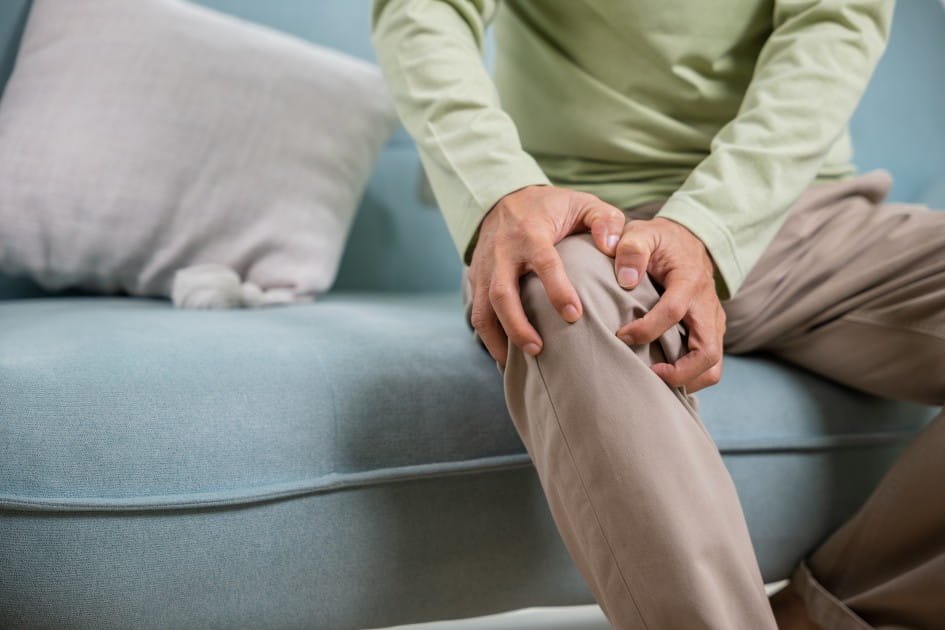
Your knee hurts. Going up stairs, going down stairs, getting out of a chair, the first half mile of a run, the end of a long day on your feet. It started as a twinge. Now it is a constant nag. Maybe you have tried bracing it, icing it, taking ibuprofen, switching shoes. The pain keeps coming back.

Most knee pain is not coming from the knee. The knee is a hinge — it does what the hip and the foot tell it to do. When the hip cannot rotate properly or the foot cannot pronate and supinate cleanly, the knee absorbs forces it was not designed for. Treat the knee in isolation and the pain comes back. Address the chain above and below it and the knee finally gets a break.

What knee pain actually is

Knee pain covers a wide range of conditions. The most common we treat at True Health:

The treatment plan depends on which type you have — and what is actually causing it.

Why knee pain usually comes from somewhere else

The knee is the middle joint in a chain. The hip is above. The foot and ankle are below. When something in that chain stops working — limited hip rotation, restricted ankle mobility, weak glutes, collapsed arches — the knee gets the leftover work. Over months or years, the tissues that were not designed to absorb that load start to fail.

This is why so many knee patients have tried PT, braces, and injections without lasting results. Those approaches focus on the knee. The cause is usually upstream or downstream. Until that cause is identified and changed, the knee keeps getting overloaded.

At True Health, we screen the whole kinetic chain — hips, knees, ankles, feet, movement patterns — at your Discovery Assessment. Then we treat what is actually causing the problem.

How True Health treats knee pain

Phase 1 — Discovery Assessment. Full evaluation of hip, knee, ankle, and foot. Movement screening including squat patterns, single-leg balance, walking gait. Identification of which structures are actually loading the knee abnormally.

Phase 2 — Calm the irritated tissue and restore motion. Soft tissue work and adjustments to address restrictions in the knee, hip, and ankle. Acupuncture for pain and inflammation. Shockwave therapy for chronic tendinopathies. Modified activity to give the tissue a chance to recover.

Phase 3 — Fix the chain. Hip and glute strengthening. Foot and ankle mobility. Movement retraining for squatting, walking, running, climbing stairs. This is what stops the knee from getting overloaded again.

Most knee patients see significant improvement within four to eight visits. Chronic cases or post-surgical recovery typically take longer. We give realistic timelines at the assessment.

When knee pain needs urgent medical attention

Most knee pain is mechanical and responds well to conservative care. Some situations need immediate medical evaluation:

For the vast majority of knee pain — chronic aches, post-activity pain, slow-onset stiffness — conservative care including chiropractic and rehabilitation should be the first approach.

Common questions about knee pain treatment

Can chiropractic help knee pain?

Yes — when the chiropractor treats the whole kinetic chain, not just the knee. Most knee pain is caused by restrictions and dysfunction upstream (hip, low back) or downstream (foot, ankle). Chiropractic addresses those joint restrictions, soft tissue work releases the overworked muscles, and rehabilitation rebuilds the patterns that protect the knee. Most knee patients see significant improvement when the full chain is addressed instead of just the knee itself.

Do you treat runner knee or patellofemoral pain?

Yes — patellofemoral pain (often called runner knee) is one of the most common knee conditions we see. Most cases are caused by hip weakness or glute inhibition that allows the femur to rotate inward, which loads the kneecap abnormally. We address the hip and glute work, soft tissue restrictions in the IT band and quad, and movement retraining for running form. Most runners are back to training within four to six weeks.

Can chiropractic help with knee arthritis?

Yes — chiropractic care can significantly improve function and reduce pain in knee arthritis. We focus on restoring motion to the joints around the knee, releasing tight tissues, addressing compensation patterns that have built up, and building strength and stability that protect the joint. We are not reversing the arthritis itself, but most patients find their pain and function improve substantially with care.

Should I get an MRI for my knee pain?

Not usually as a first step. A thorough physical exam can identify most of the common causes of knee pain. We will recommend imaging if your symptoms suggest a structural problem that requires imaging confirmation, or if your case is not responding to conservative care as expected. Many patients have come to us with MRIs showing meniscus tears but the actual source of pain was hip or foot dysfunction, not the meniscus.

How long does knee pain take to heal with chiropractic?

Most patients see meaningful improvement within four to eight visits. Full resolution and stabilization typically takes ten to twenty visits over eight to sixteen weeks. Chronic tendinopathies and post-surgical recovery take longer. Timeline depends heavily on how chronic the issue is and how well rehab and movement changes get implemented.

Do I need surgery for my knee pain?

Most knee pain does not require surgery. Most cases respond to a coordinated conservative care plan addressing the actual cause. Surgery is appropriate for specific situations — significant meniscus tears with mechanical symptoms, ligament ruptures, significant arthritis with failure of conservative care. We will tell you honestly if your case looks like a surgical candidate. Get conservative care evaluation first — you can always pursue surgery later from a better-informed position.

Will shockwave therapy help with patellar tendinitis?

Often yes. Patellar tendinopathy is one of the conditions where shockwave therapy (EPAT) is well-researched and effective, particularly for chronic cases that have not responded to other treatment. We typically combine shockwave with corrective exercise to address why the tendon failed in the first place. Most patients complete four to six sessions over four to six weeks and see significant improvement.

Does insurance cover knee pain treatment?

Most major medical plans cover chiropractic care for knee pain. We verify your specific coverage before your first visit. HSA and FSA payments are accepted. If your knee injury is from a car accident or work injury, auto insurance (PIP) and workers comp typically cover care fully.

Knee pain treatment across DuPage County

Related conditions and treatments


Find out what is actually causing your knee pain.

Book a Discovery Assessment. We will screen the whole chain — hip, knee, ankle, foot — and build a plan that addresses the actual cause.

Book Your Discovery Assessment

Or call: (630) 796-2083