
Pinched nerve treatment Lombard starts with a simple point: a pinched nerve is not just a sore muscle that needs more stretching. It is a nerve under pressure or irritation, often from a disc, a restricted joint, or tight surrounding tissue. The pain can travel. People feel burning, tingling, numbness, or a weak, heavy feeling along a path in the arm or the leg, and the spot they want to rub is not always the place where the pressure starts.
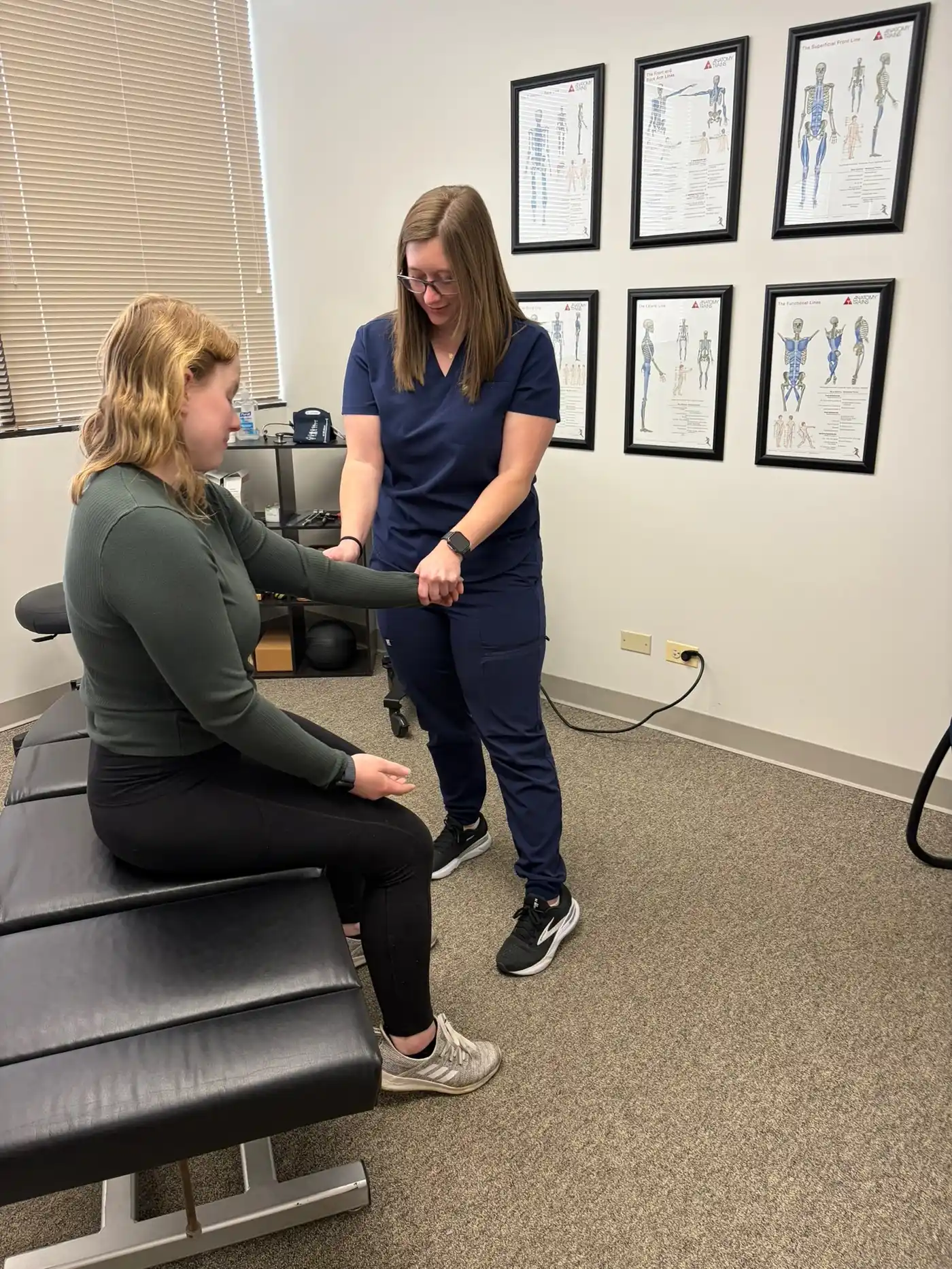
At True Health Chiropractic & Acupuncture, pinched nerve treatment Lombard starts by looking for that source first. The goal is to calm the irritation, restore motion where it is safe, and be honest when the pattern needs imaging or a medical referral instead of another stretch or another guess.
Quick answer: A pinched nerve, often called radiculopathy when it involves a spinal nerve root, happens when something crowds or irritates a nerve. In the neck, symptoms may travel into the shoulder, arm, or hand. In the low back, they may travel into the hip, buttock, or leg — and when the sciatic nerve is involved, people often call that sciatica. Care starts with finding the irritant, not with treating the tingling itself.
On this page
- What a pinched nerve actually is
- Common places a nerve gets irritated
- Can a pinched nerve heal on its own?
- Pinched nerve treatment Lombard: how we find the source
- What to expect, and who this care is for
- When to see a doctor right away
- Frequently asked questions
What a pinched nerve actually is
Nerves leave the spine through small openings and travel into the arms and legs. For a general overview, see the MedlinePlus pinched-nerve article. If a disc bulge, a bone spur, a swollen or restricted joint, or tight muscle tissue takes up too much of that space, the nerve can become irritable. The result may be pain, pins and needles, numbness, or weakness along the nerve’s path.
That is different from a simple muscle strain, which usually stays local, feels sore when you press on it, and often eases over days with ordinary movement. It is also different from peripheral neuropathy, which more often causes stocking- or glove-like symptoms, sometimes in both feet or hands, and is not always caused by a single pinched nerve in the spine. We already have plain-language articles on whether a pinched nerve can settle on its own, neuropathy versus a pinched nerve, and neck versus upper-back sources. Those posts are supporting reading. This page is the service page for people who want care, not only an explanation.
A pinched nerve can also exist without dramatic pain. Some people mainly notice tingling, a sleepy limb, or a grip or foot that does not feel reliable.
Common places a nerve gets irritated
We see pinched-nerve symptoms from several familiar patterns:
- A cervical (neck) disc or joint problem that sends symptoms into the shoulder, arm, or hand
- An upper-back or rib-joint problem that can mimic or overlap with neck symptoms
- A lumbar (low-back) disc, joint, or stenosis problem that sends symptoms into the hip, buttock, or leg
- Sciatica, when the sciatic nerve or its roots are the irritated pathway
- Muscle-related irritation, such as a tight piriformis in some leg-pain cases
Two people can describe “a pinched nerve” and need different plans. That is why a careful exam matters more than the label.
Can a pinched nerve heal on its own?
Sometimes, yes. Mild cases may settle over a few weeks if the irritation is modest and you are not repeatedly provoking it. Many people do get better with time, careful movement, and treatment of the cause. Waiting is not always harmless, though. If weakness is progressing, numbness is spreading, or symptoms have lasted more than a couple of weeks without improvement, it is reasonable to get the problem examined rather than hope it will fade.
The blogs already on this site discuss those timelines in more detail. Some pinched nerves calm down, and some do not until the pressure or movement problem is addressed. We will not promise that every nerve “fixes itself,” or that every nerve needs aggressive care.
Pinched nerve treatment Lombard: how we find the source
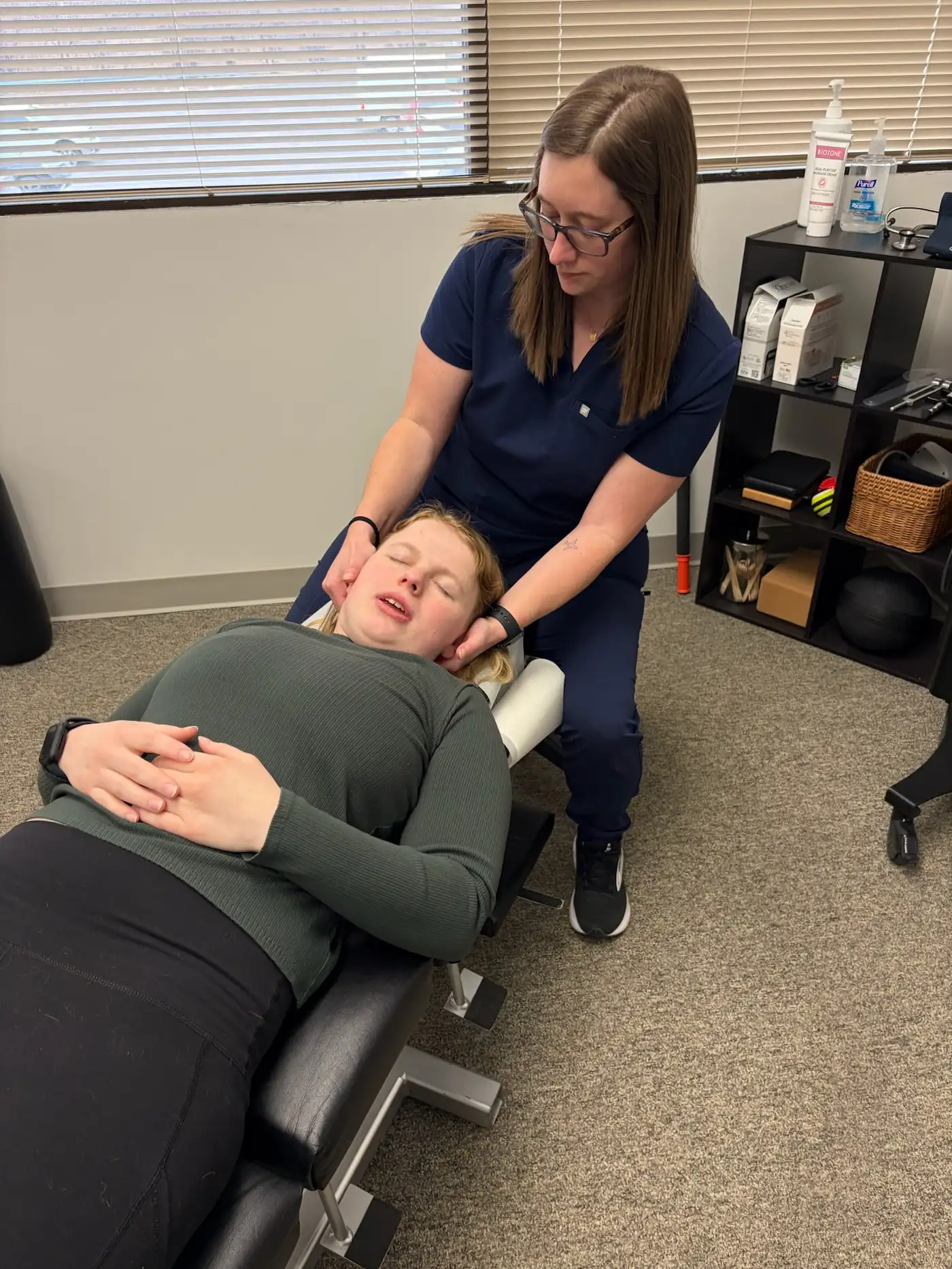
True Health offers both spinal decompression and shockwave therapy. Decompression may be part of pinched nerve treatment Lombard when disc pressure appears to be involved; shockwave is used more often for stubborn tendon or fascia problems and is not the usual first tool for a pinched spinal nerve. Your first visit is a New Patient Discovery Assessment, which typically lasts 45 to 60 minutes. We take a history, examine the neck, back, and the limb that is symptomatic, and look for clues about where the nerve is being irritated. We will also look for signs that this is not a straightforward musculoskeletal problem.
Depending on the findings, a plan may include:
- Gentle chiropractic adjustments to restore motion in restricted spinal or pelvic joints
- Flexion-distraction on a manual Hill Air Flex table, or other low-force methods, when a sensitive disc or nerve is involved
- Spinal decompression when disc pressure appears to be part of the problem
- Soft-tissue work for muscles that are adding to the irritation
- Simple activity changes and exercises that do not keep tugging on the nerve
- Acupuncture, when it fits the exam
- Cold laser or electrical stimulation, when those tools are appropriate
Shockwave is not the usual first tool for a pinched spinal nerve. It is used more often for stubborn tendon and fascia problems. If it is not appropriate, we will not include it.
We co-manage or refer when the exam suggests imaging, a neurologist or orthopedist, or more urgent medical care. A chiropractor may help many mechanical pinched-nerve patterns. We cannot, and should not, treat every nerve problem in isolation.
What to expect, and who this care is for
You should leave the first visit with a plain-language explanation of what looks most likely, what we would do next, and which symptoms would mean you should not wait. If we can help, we will show you the plan. If we cannot, we will say so.
This pinched nerve treatment Lombard page is for people in Lombard and nearby towns — Villa Park, Glen Ellyn, Downers Grove, Oakbrook Terrace, Elmhurst, Wheaton, and Addison — who are tired of guessing whether the tingling in an arm or leg is “just tightness.” The office is at 477 E Butterfield Rd Ste 205, just off Butterfield Road near the Yorktown area.
Many patients choose cash pay, with simple, transparent pricing. HSA and FSA cards are accepted. To check your insurance coverage, call (630) 796-2083. Shockwave is used only when it is appropriate, which often means it will not be the featured treatment for a pinched spinal nerve.
When to see a doctor right away
Seek urgent or emergency care, not a routine chiropractic visit, if you have:
- Loss of bladder or bowel control, or numbness in the groin or saddle area
- Rapidly worsening weakness in an arm or leg, or a foot or hand that will not do its job
- A sudden, severe headache, confusion, trouble speaking or walking, or symptoms after a significant trauma
- Fever with severe spinal pain
- Progressive numbness that is spreading quickly
Those can be signs of a serious neurological or medical problem. For other stubborn, traveling pain or tingling, a careful exam is a reasonable next step.
Frequently asked questions
Can a chiropractor help a pinched nerve?
A chiropractor may help when a joint, disc, or movement problem is irritating the nerve and conservative care is still reasonable. The useful work is finding the source, then using gentle adjustments, decompression, or other conservative care when they fit. If the pattern points to a more serious neurological problem, worsening weakness, or a cause we cannot treat here, we will refer you. No adjustment “uncricks” every pinched nerve.
How do I know if it is a pinched nerve or a pulled muscle?
A pinched nerve often travels. It may tingle, burn, or go numb along a path, and stretching the sore area may not change the pressure at the source. A pulled muscle usually stays more local, feels sore when you press on it, and often eases over days with ordinary movement. The overlap can be confusing, which is why an exam is more reliable than a self-diagnosis.
How long does a pinched nerve take to heal?
Mild cases may settle in a few weeks. Symptoms that come from a disc or a longer-standing movement problem can take longer, or return, if the cause is not addressed. We cannot give an honest timeline before we examine you. After the first visit we can share a reasonable estimate and change the plan if you are not progressing. Weakness that is getting worse should not be waited out.
Is a pinched nerve the same as sciatica or neuropathy?
Not exactly. Sciatica is a specific pattern of nerve irritation that travels down the leg, often from a low-back or buttock source. A pinched nerve can also happen in the neck and travel into the arm. Neuropathy is a broader term and often involves more of a stocking- or glove-like pattern, sometimes in both feet, that is not always caused by a single spinal pinch. We will tell you which pattern your exam looks like.
Do I need an MRI before treatment?
Not always. Many people can start with a history and a hands-on exam, especially if symptoms are mild and not progressing. Bring any imaging you already have. We may recommend an MRI or a medical referral when weakness is present, symptoms are worsening, trauma was involved, or the pattern does not fit a straightforward musculoskeletal problem.
How do I pay for care?
Many patients here choose cash pay. Pricing is discussed after your assessment, and we will tell you what to expect before care begins. HSA and FSA cards are accepted. We also accept insurance; call (630) 796-2083 and we will check your coverage. We do not publish dollar amounts on this page.
What does a pinched nerve feel like?
People often describe pain, tingling, burning, or numbness that follows an arm or a leg, sometimes with weakness or a “pins and needles” feeling. Neck-related irritation may travel into the shoulder, arm, or hand; low-back-related irritation may travel into the hip, thigh, or foot. Not every tingle is a pinched nerve, and a pulled muscle can feel different. An exam is how we sort that out and decide whether chiropractic care, imaging, or a medical referral is the next step.
Can a pinched nerve cause numbness in the hands or fingers?
It can, when the irritation is in the neck or along a nerve that supplies the hand. Numbness in the hands can also have other causes, so it should not be assumed. If numbness is new, worsening, or paired with noticeable weakness, get a timely evaluation. At our Lombard office, the exam looks for the source rather than treating the fingers alone. If the pattern points to a medical problem, we will refer you.
Should I rest or stay active with a pinched nerve?
Complete rest is not always helpful, and pushing through worsening symptoms is not either. Gentle activity that does not increase tingling, numbness, or weakness is often a reasonable starting point, while sharper or more loaded movements may need to be paused. After the exam we can tell you what to keep, what to modify, and what to stop. If symptoms are rapidly getting worse, do not wait on a home experiment — get evaluated.
When is a pinched nerve an emergency?
Get urgent medical care if you have new or rapidly worsening weakness, numbness in the groin or inner thighs, or changes in bladder or bowel control, or if symptoms follow a serious fall or accident. Those signs are not something to work out with stretching. For slower-onset tingling or burning without those warning signs, a Discovery Assessment at our Lombard office is a reasonable place to start. If you are unsure, err on the side of medical care.
Call to action
If arm or leg tingling, burning, or numbness has you wondering whether a nerve is being pinched, pinched nerve treatment Lombard can start with a clearer exam of the source.
Call True Health Chiropractic & Acupuncture at (630) 796-2083. We are at 477 E Butterfield Rd Ste 205, Lombard, IL 60148.
Hours: Monday–Wednesday 9:00 a.m.–1:00 p.m. and 2:30–7:00 p.m.; Thursday 1:00–7:00 p.m.; Friday 9:00 a.m.–1:00 p.m.; Saturday and Sunday closed.