Start Your Health Journey Here – Schedule Your Consultation Today!

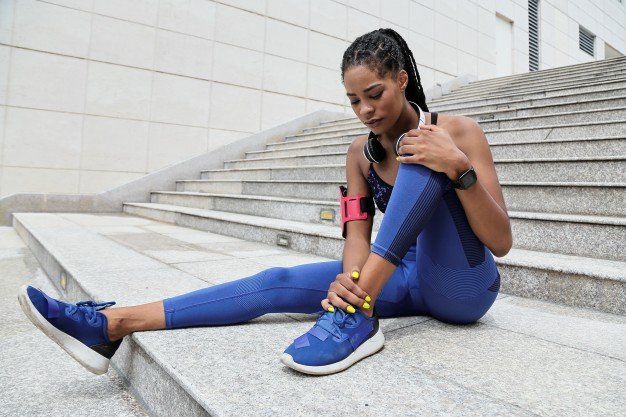
You play. You compete. You train. Now something is wrong — a strain that did not heal, a recurring tightness, a joint that does not move the way it used to. You have iced. You have rested. You have stretched. The athletic trainer told you to give it more time. It is not getting better.

Sports injuries do not heal on rest alone. They heal when the underlying movement dysfunction that caused the injury — or the compensation pattern the injury created — actually gets addressed. We treat athletes every week at True Health: high school, college, weekend warriors, masters competitors, and post-collegiate adults still doing what they love. The goal is not “play through it.” The goal is fix it so you stay in the sport.

Why sports injuries do not heal with rest alone

Tissues heal in roughly six weeks. So why do so many athletes still feel that hamstring tweak three months later? Why does the shoulder pain keep coming back every season? Why does the same calf strain happen on the same leg every year?

Because rest heals the tissue. Rest does not address what caused the tissue to fail. Most sports injuries are the result of:

Until the underlying pattern is fixed, the same injury keeps happening. Sometimes worse each time.

Sports injuries we treat at True Health

We see the full range of athletic complaints:

We hold same-week appointment slots during spring and fall sports seasons specifically for active athletes who need to get back fast.

How True Health treats sports injuries

Athletic care at True Health is built around getting you back to performance — not just out of pain.

Phase 1 — Discovery Assessment. Full history of the injury and your training. Movement screening to find the underlying asymmetry or restriction that contributed. Sport-specific testing for the demands of what you do. We figure out not just what hurts but why it hurts.

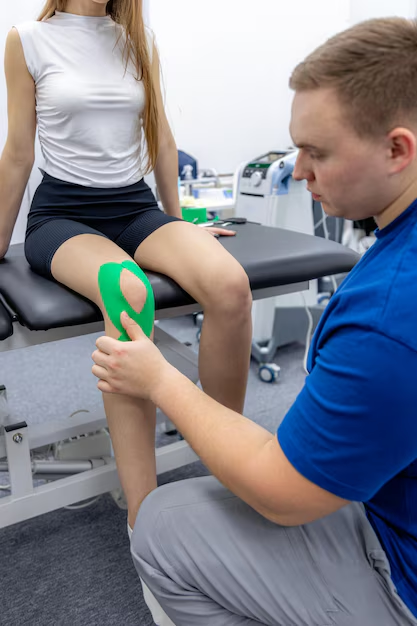
Phase 2 — Treat the injury and the cause. Adjustments to restore joint motion. Soft tissue work on the affected and compensating tissues. Acupuncture for pain and inflammation when appropriate. Shockwave therapy for chronic tendinopathies. Specific corrective exercises to address the movement pattern.

Phase 3 — Return to performance. Sport-specific loading progression. Movement retraining. Strength work for the inhibited stabilizers. Most athletes return to training within two to four weeks for acute injuries; chronic patterns take longer.

We coordinate with athletic trainers, coaches, and strength coaches when relevant. We do not operate in a vacuum.

We treat athletes from local schools and teams

True Health works with athletes from across the DuPage County competitive scene:

If you compete and need someone who actually understands the demands of your sport, that is what we do.

Common questions about sports injury care

Can a chiropractor treat sports injuries?

Yes — chiropractors with sports training are well equipped to treat the majority of common sports injuries. We address joint restrictions, soft tissue dysfunction, movement asymmetries, and the compensation patterns that cause and perpetuate athletic injuries. For severe injuries requiring surgery or orthopedic intervention, we refer appropriately. For the vast majority of sports injuries — strains, tendinopathies, joint dysfunction, recurring tightness, movement-related pain — conservative care that addresses the underlying cause is the right approach.

How quickly can I get back to training after a sports injury?

It depends on the injury and the cause. Most acute strains and sprains respond to two to four weeks of focused care before we begin a return-to-sport progression. Chronic tendinopathies (Achilles, patellar, plantar fasciitis, tennis elbow) often take six to twelve weeks. Post-surgical or post-fracture rehabilitation is longer. At your Discovery Assessment we give you a realistic timeline and a phase-by-phase progression. We do not put you back too soon.

Do you treat high school athletes?

Yes — high school athletes are a significant part of our practice. We see athletes from York, Wheaton North, Wheaton Warrenville South, Willowbrook, Addison Trail, the Glenbards, and other area schools. We hold same-week appointment slots during competition seasons specifically for active athletes who need to get back fast. We work with athletic trainers and coaches when relevant.

Do you do anything for chronic tendinopathies like Achilles or patellar tendinitis?

Yes — chronic tendinopathies are one of the areas where we see the best results, particularly using shockwave therapy (EPAT). Shockwave is research-backed for chronic tendinopathies that have not responded to rest, stretching, and conventional rehab. It is non-invasive and most patients see significant improvement within four to eight sessions. We combine shockwave with corrective movement work to address why the tendon failed in the first place.

Will care interfere with my training?

Usually no — we build the plan around your training schedule. For most sports injuries, we modify training rather than stop it. The goal is to keep you moving in ways that support healing while we address the underlying cause. We tell you exactly what is okay to do, what to modify, and what to avoid for your specific injury. Complete shutdowns are rare and only used when actually necessary.

What is shockwave therapy and is it painful?

Shockwave therapy (EPAT) uses acoustic pressure waves to stimulate healing in chronic soft tissue injuries — Achilles tendinopathy, plantar fasciitis, patellar tendinitis, tennis and golfer’s elbow, and other chronic tendinopathies. It feels like a strong tapping sensation. Most patients describe it as uncomfortable but tolerable. There is no needles, no medication, no downtime. Most patients see significant improvement within four to eight sessions.

Does insurance cover sports injury treatment?

Most major medical plans cover chiropractic and rehabilitation services for sports injuries. We verify your specific coverage before your first visit. Shockwave therapy is sometimes covered and sometimes not — we tell you upfront. HSA and FSA payments are accepted. If your injury occurred in a school sport, some athletic policies provide additional coverage.

Sports injury care across DuPage County

Our office is at 477 E Butterfield Rd Ste 205, Lombard, IL 60148.


Get back to your sport — and stay there.

Book a Discovery Assessment. We will figure out the actual cause of the injury and build a plan that returns you to performance — not just out of pain.

Book Your Discovery Assessment

Or call: (630) 796-2083