
Neuropathy vs pinched nerve: the two get mixed up all the time, because both can leave you with burning, tingling, and numbness. If your hand keeps falling asleep or your feet buzz at night, the label matters, because the fix is completely different.
The short answer: a pinched nerve usually causes one-sided symptoms that follow a single path down an arm or leg and change with posture or movement. Peripheral neuropathy usually shows up in both feet or both hands, starts at the toes or fingertips, and ignores how you move your neck or back. Some people have both.
Neuropathy vs pinched nerve: 5 clues that tell them apart
Neuropathy vs pinched nerve comes down to pattern, so use this table as a starting point, not a diagnosis. Real answers come from an exam, and sometimes from lab work or nerve testing.
| Clue | Pinched nerve | Peripheral neuropathy |
|---|---|---|
| Which side | Usually one side only | Often both feet or both hands |
| Where it starts | Neck or back, then travels down one arm or leg | Toes or fingertips, then creeps upward |
| What changes it | Turning your neck, bending, coughing, or sitting too long | Little change with movement; often worse at night |
| Other signs | Neck or back pain, stiffness, a weak grip or foot | Numb or burning feet, loss of feeling, balance trouble |
| Common causes | Disc problems, tight joints, narrowed spinal openings, muscle guarding | Diabetes, vitamin B12 deficiency, chemotherapy, alcohol, certain medications |
What a pinched nerve actually is
A pinched nerve is pressure. Something nearby, such as a bulging disc, a stiff joint, or a tight muscle, is crowding a nerve where it leaves the spine. The nerve reports the problem along its whole length, so you feel it in your hand or foot even though the trouble sits in your neck or low back. Our guide to pinched nerves in the neck vs the upper back shows how the location changes the symptoms.
What peripheral neuropathy actually is
Peripheral neuropathy means the nerves out in your hands and feet are not carrying signals the way they should. It most commonly begins in the hands and feet, and diabetes is one of the most common causes, according to NewYork-Presbyterian. Other causes include vitamin deficiencies, chemotherapy, and some medications. This is not random. Something is damaging those nerves, and finding out what matters more than treating the tingling.
Can you have both?
Neuropathy vs pinched nerve is not always an either-or question. Yes, you can have both, and it is more common than most people expect. A nerve that is already stressed by diabetes or a vitamin shortage can be more sensitive to pressure at the spine. That is why one-sided symptoms layered on top of both-feet symptoms deserve a closer look. We start by sorting out which parts are mechanical, meaning pressure we can address, and which parts need your physician involved.
How we sort it out at our Lombard office
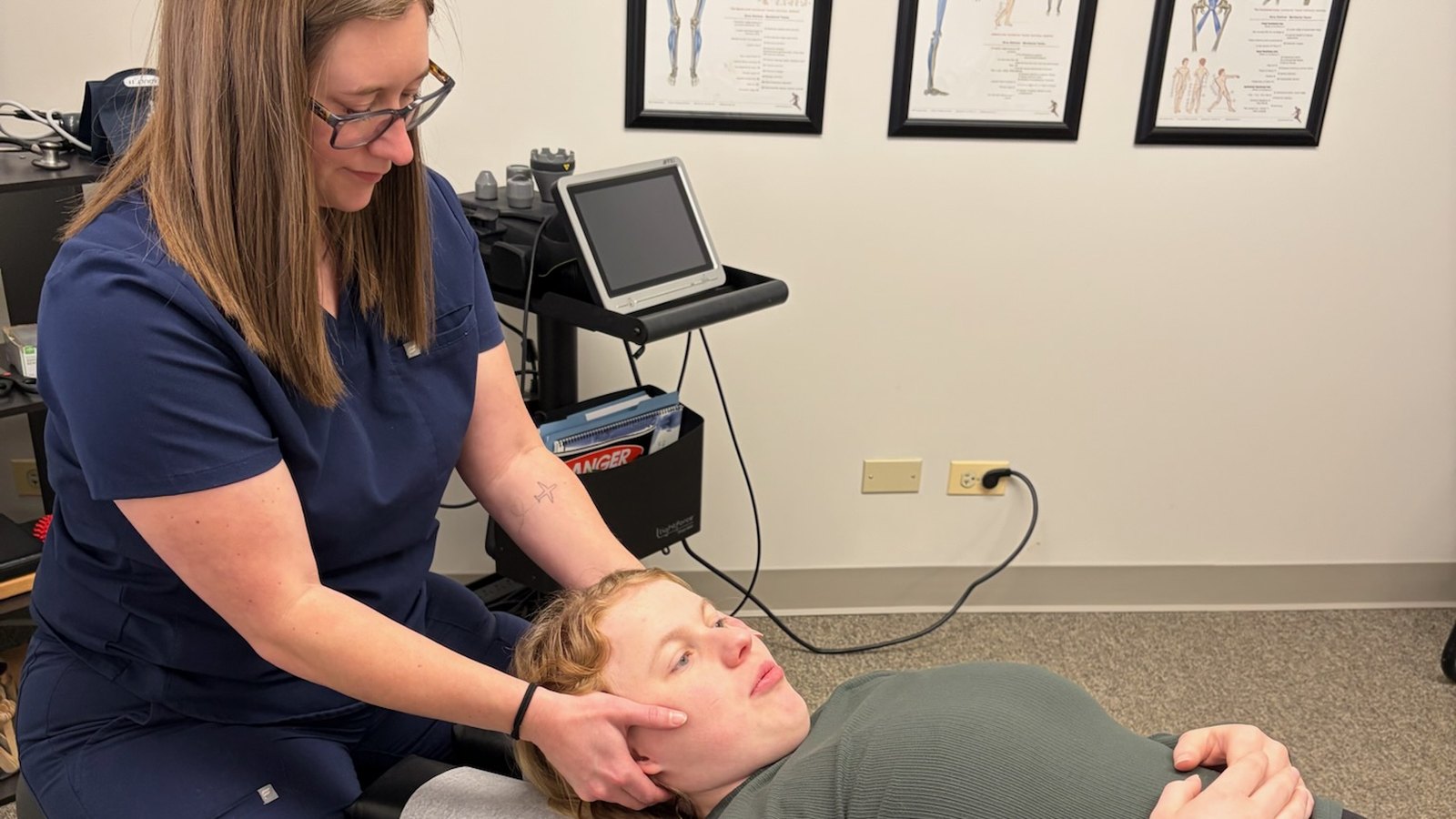
The neuropathy vs pinched nerve question is the first thing we try to answer. At your New Patient Discovery Assessment, we ask where the symptoms start, which side, and what makes them better or worse. Then we test how your neck and back move, check reflexes, strength, and sensation in your arms and legs, and look at how you carry yourself day to day. If your findings point toward a spinal cause, your plan may include adjustments, rehab, and Class IV laser therapy. If they point toward a metabolic or systemic cause, we refer you to your physician for labs and testing.
For more on the neuropathy vs pinched nerve question when your feet are involved, read whether a chiropractor can help with neuropathy. If your symptoms look like a pinched nerve, see whether a pinched nerve can heal on its own.
When to see a doctor right away
Go to the emergency room for sudden weakness, a drooping face, trouble speaking, or loss of bladder or bowel control. Get checked promptly for numbness that is spreading, a foot that drags or slaps when you walk, a sore on a numb foot that will not heal, or burning feet with high blood sugar or diabetes. Those need a medical workup, not a wait-and-see approach.
Frequently asked questions
How do you tell if it is neuropathy or a pinched nerve?
Look at the pattern. A pinched nerve is usually one-sided, follows one path down an arm or leg, and changes with neck or back movement. Neuropathy usually hits both feet or both hands and starts at the toes or fingertips. An exam confirms which one you have.
Can a pinched nerve cause numbness in both feet?
Rarely, and usually not on its own. Numbness in both feet more often points to neuropathy or a metabolic cause. Numbness in both legs with trouble controlling your bladder or bowels is an emergency and needs the ER right away.
Does neuropathy start in one foot or both?
Most often both. It tends to start in the toes of both feet and move upward in a sock-like pattern. Symptoms in only one foot or leg are more likely to trace back to a nerve pinched in the spine or a local injury.
Can a chiropractor tell the difference between neuropathy and a pinched nerve?
A chiropractor can examine the pattern of your symptoms, test reflexes, strength, and sensation, and decide whether a spinal cause fits. If your findings suggest diabetes, a vitamin problem, or another medical cause, we refer you out for testing.
Can a pinched nerve turn into neuropathy?
A nerve compressed for a long time can become more irritable and slower to recover, but a pinched nerve and peripheral neuropathy are different problems. The longer the pressure stays, the harder it tends to be on the nerve, which is one reason not to ignore symptoms that keep coming back.
Not sure which one you have? Book your New Patient Discovery Assessment and we will find out what is actually going on.
Last updated November 5, 2026 · Dr. Amanda Myers, DC, MS · True Health Chiropractic & Acupuncture, Lombard, IL
One Response