By Dr. Amanda Myers, DC, MS · Last updated October 28, 2026
Most people ask about shockwave therapy results. The better first question is whether it is safe for you. For most healthy adults it is a low-risk treatment. For a short list of people, it is not the right call.
Is shockwave therapy safe? For most healthy adults, yes. Side effects are usually mild and short-lived, such as redness, soreness, or light bruising. Shockwave is not appropriate if you are pregnant, have a bleeding disorder or take blood thinners, have a pacemaker or severe heart condition, have active cancer, or have an infection in the treatment area.
Who should not get shockwave therapy
Hospital physiotherapy services publish a short list that most clinics follow. We screen every patient against it before the first treatment. St George’s NHS physiotherapy lists these reasons to hold off:
| If you have this | What it means for shockwave |
|---|---|
| Pregnancy | Hold off. Tell us if you are or could be pregnant. |
| Bleeding disorder or blood thinners | Hold off unless your doctor clears it. Bruising risk goes up. |
| Pacemaker or severe heart condition | Hold off. Talk to your cardiologist first. |
| Active cancer | Not appropriate. |
| Infection or open wound in the area | Wait until it has healed. |
| Recent steroid injection in the area | Wait. The NHS service above says 12 weeks. |
None of this is a diagnosis. It is the reason the first visit is an assessment, not a treatment. If something on this list applies to you, we tell you plainly, and we point you to the right provider.
What side effects are normal
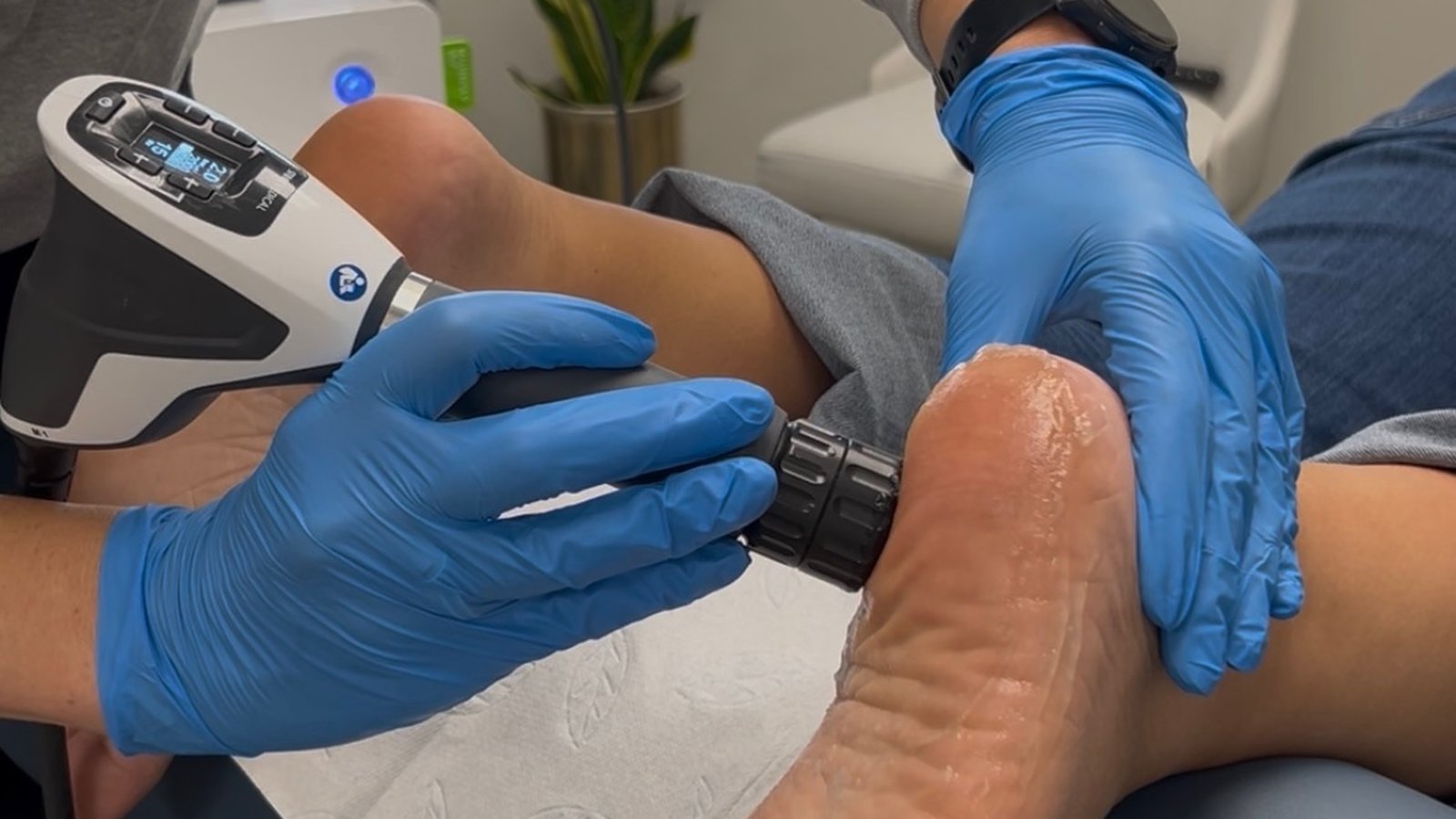
Expect some discomfort while it is running. Afterward, the area can be red, sore, or lightly bruised for a day or two. Numbness or tingling is rare and usually passes. If you want the full picture of what it feels like, read our honest breakdown of whether shockwave therapy hurts.
Why the type of device matters less than the screening
We use a radial system. Whether radial or focused waves fit your problem is a separate question, covered in radial vs focused shockwave therapy. The safety list above applies to both.
What a safe plan looks like
A responsible plan starts with an exam, not a package. Pain is the last thing to show up, not the first, so we look at why the tendon or fascia got overloaded, then use shockwave where it fits. A typical course is a few visits spaced over weeks, reassessed as you go. Our shockwave therapy page explains what we treat in Lombard.
Frequently asked questions
Is shockwave therapy safe?
For most healthy adults, yes. Side effects are usually mild and short-lived. A screening before your first visit catches the situations where it is not appropriate.
Who is not a candidate for shockwave therapy?
People who are pregnant, take blood thinners or have a bleeding disorder, have a pacemaker or severe heart condition, have active cancer, or have an infection or open wound in the treatment area. Recent steroid injections in the same area also call for a wait.
What are the side effects of shockwave therapy?
Redness, soreness, swelling, or light bruising in the treated area, usually for a day or two. Temporary numbness or tingling is rare.
Can you get shockwave therapy if you take blood thinners?
Usually not without clearance from the doctor who prescribes them. Shockwave can cause bruising, and blood thinners make that more likely. Tell us every medication you take at your first visit.
Is shockwave therapy safe after a cortisone shot?
Wait first. Guidance varies, and the NHS physiotherapy service cited above uses 12 weeks. We will go by your records and your doctor’s advice.
When to see a doctor first
Get medical care before any treatment if your pain follows a fall or accident, you have swelling with fever, redness that is spreading, or numbness and weakness that are getting worse.
Not sure whether shockwave fits your situation? Book your New Patient Discovery Assessment.
One Response