
If you can put one finger on a spot beside your lower spine, near the dimple above your buttock, and say “it hurts right here,” you may be describing SI joint pain. It’s easy to mistake for hip pain or sciatica. Here’s where it’s felt, what sets it off, and what helps.
Quick answer: SI joint pain comes from the sacroiliac joints, where the base of your spine (the sacrum) meets your pelvis. It’s usually felt on one side of the low back, just off the spine, and in the buttock, sometimes spreading to the groin or thigh. It often flares when you stand up, climb stairs or roll over in bed.
What the SI joint is, and how it differs from the hip
You have two sacroiliac joints, one on each side, linking the sacrum to your pelvis. They move only a few degrees and are held steady by strong ligaments, yet they carry the weight of your upper body into your legs every time you stand or walk.
Your hip joint is the ball-and-socket joint lower down and toward the front, where the thigh bone meets the pelvis. The SI joint sits higher and toward the back, just above and behind the joint we covered in our post on hip pain and chiropractic care.
Where is SI joint pain felt?
It’s usually felt on one side of the low back, below the belt line and just off the spine, and in the buttock on the same side. It can spread to the groin, outer hip or back of the thigh, but it rarely travels below the knee.
Common SI joint pain symptoms
- Sharp, catching pain when standing up from a chair or getting out of the car
- Aching after standing or sitting for a long time
- Pain on stairs or when standing on one leg
- Discomfort rolling over in bed or lying on the sore side
What causes SI joint pain?
Common contributors include:
- A fall onto the buttocks, a car accident, or a heavy lift with a twist
- Repetitive one-sided activities, like golf, running or carrying a heavy bag on one side
- Changes in how you walk after a foot, knee or hip injury
- Arthritis, inflammatory conditions such as ankylosing spondylitis, or a past lower-back fusion that shifts extra load onto the joint
- Pregnancy, when hormones naturally loosen the pelvic ligaments
- Long hours of sitting, which stiffen the hips and leave the glutes underused
SI joint pain vs. sciatica vs. hip joint pain
| SI joint | Sciatica | Hip joint pain | |
|---|---|---|---|
| Where it’s felt | One side of the low back and buttock; rarely below the knee | Buttock and down the leg, often into the calf or foot, with tingling or numbness | Groin and front of the hip, sometimes the outer hip or thigh |
| Typical triggers | Standing up from sitting, stairs, rolling over in bed, standing on one leg | Long sitting, bending forward, coughing or sneezing | Walking, putting on socks and shoes, crossing your legs |
| What helps | Restoring pelvic motion, glute and core strength, better sitting habits | Easing pressure on the irritated nerve and addressing the cause | Hip mobility, strength work and managing load |
Overlap is common, so a hands-on exam is the reliable way to sort it out. For leg symptoms, see our sciatica treatment page or sciatica vs. piriformis syndrome. For groin or front-of-hip pain, see our hip pain treatment page.
How to relieve SI joint pain at home
- Keep moving gently. Short, easy walks usually beat long sitting or bed rest.
- Stand up evenly. Scoot forward, feet under you, and push up through both legs.
- Sleep with support. On your side, keep a pillow between your knees.
- Try ice or heat for 15 to 20 minutes, whichever feels better.
- Skip one-legged moves. Sit to put on pants, socks and shoes.
If a week or two of these changes isn’t helping, or the pain keeps returning, it’s time for an exam.
How a chiropractor helps with SI joint pain
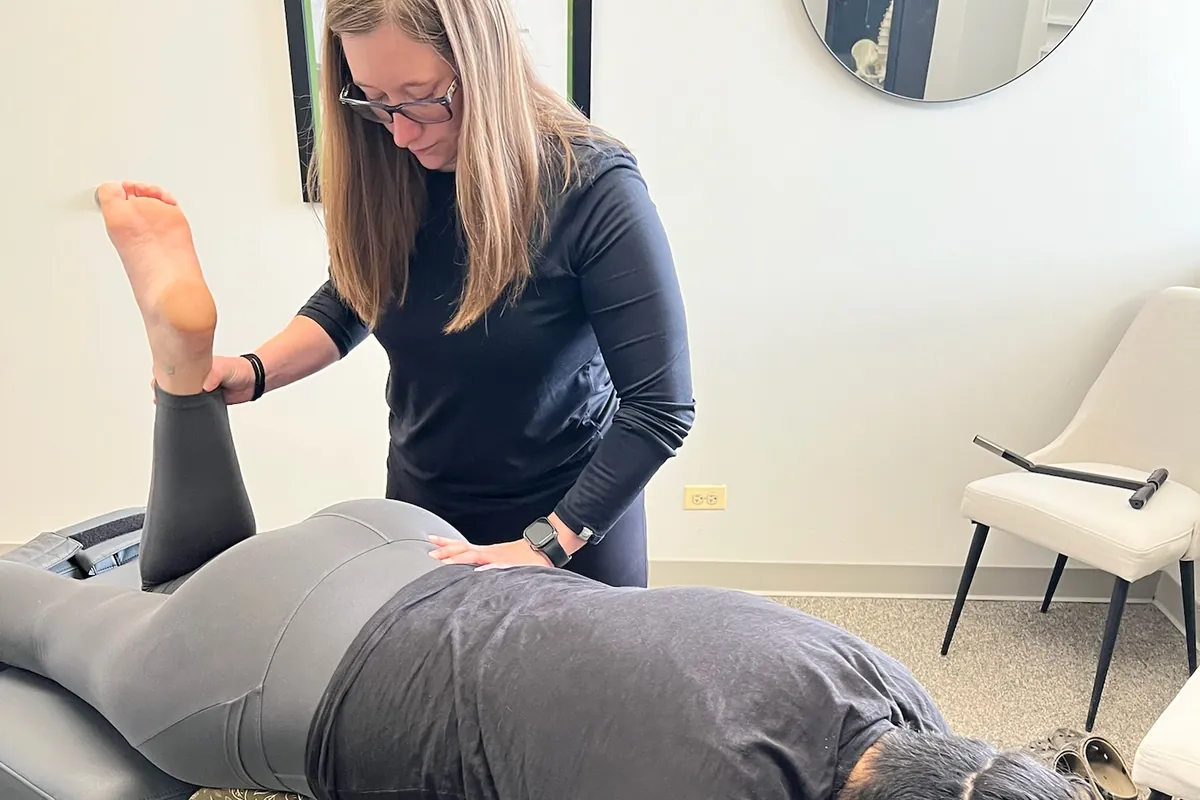
At True Health Chiropractic and Acupuncture in Lombard, every new patient starts with a New Patient Discovery Assessment, which takes about 45 to 60 minutes. I go over your history and use hands-on tests that load the SI joint, hip and lower back separately, so we know which one is driving your pain before recommending anything.
If you need a chiropractor for SI joint pain and the joint is the main problem, care may include:
- Chiropractic adjustments to improve motion in the pelvis and lower back
- Flexion-distraction on our manual Hill Air Flex table, a gentle, rhythmic way to move the low back
- Therapeutic massage with Shatavia or Stephanie for tight glutes, hip and low-back muscles
- Cold laser or e-stim to help calm a sore area
- Glute and core exercises to keep the joint supported between visits
We’re cash-pay friendly, accept HSA and FSA cards, and are rated 5.0 on Google by 100+ patients. We see people from Lombard, Villa Park, Glen Ellyn, Elmhurst and Downers Grove. Learn more about our back pain treatment.
When to see a doctor right away
Get prompt medical care, not a chiropractic visit, if low back or pelvic pain comes with numbness in the groin, inner thighs or a leg, new leg weakness, changes in bowel or bladder control, fever, or unexplained weight loss, or if it started after a hard fall or accident. In an emergency, call 911.
Also see your doctor if your back is stiffest in the morning and loosens with activity, a pattern that can point to SI joint inflammation (Cleveland Clinic’s overview of sacroiliitis).
Frequently asked questions
Where is SI joint pain felt?
Usually on one side of the low back, just beside the spine, and in the buttock. It can spread to the groin, outer hip or thigh, but rarely goes below the knee.
What does SI joint pain feel like?
Most often a deep, dull ache on one side of the low back and buttock, with sharper, catching pain when you stand up, climb stairs or roll over in bed.
Is walking good for SI joint pain?
For most people, yes. Gentle walking keeps the joint moving. Start with short, flat walks and shorter steps, and ease off if pain is sharper afterward instead of calmer.
How to sit with SI joint pain?
Keep both feet flat and your weight even on both sitting bones, without crossing your legs or sitting on a wallet. A rolled towel behind your low back can help. Get up every 30 minutes or so.
What causes SI joint pain?
Too much, too little or uneven motion in the joint, often from falls, repetitive one-sided activities, changes in how you walk, arthritis, long sitting, or pregnancy, when hormones loosen the pelvic ligaments.
Get your low back and pelvis checked in Lombard
If one side of your low back or buttock keeps flaring, an exam can show whether the SI joint, hip or lower back is behind it.
Book Your New Patient Discovery Assessment
Written by Dr. Amanda Myers, DC, MS, True Health Chiropractic and Acupuncture, Lombard, IL. Last updated: November 19, 2026. General education only, not a substitute for an exam.
One Response