
Your leg hurts from the buttock down, and someone told you it is sciatica. Someone else said piriformis syndrome. Both labels describe the same kind of pain, which is why people get stuck guessing. So which one is it, and does it change what you do next?
The short answer: sciatica is a symptom, pain along the sciatic nerve, and it is usually triggered by a disc or the nerve root in your low back. Piriformis syndrome is one possible cause, where a tight muscle deep in the buttock squeezes that nerve. The pain feels alike. The pattern around it is different.
Sciatica vs piriformis syndrome: how they differ
Sciatica is the name for pain that travels from the low back or buttock down the leg. It is not a diagnosis by itself. The real question is what is irritating the nerve. Most often it is a disc or a narrowed opening in the lower spine. Less often it is the piriformis, a small muscle behind the hip joint that the sciatic nerve runs beside, and in some people through.
| What you notice | Sciatica from the low back | Piriformis syndrome |
|---|---|---|
| Where it starts | Low back, often with buttock and leg pain | Deep in the buttock, often with little back pain |
| Worse with | Bending forward, coughing, sneezing | Sitting for a long time, climbing stairs, running |
| How far it travels | Can reach below the knee into the foot | Usually stays in the buttock and back of the thigh |
| Tender spot | Not usually one spot | A sore point in the middle of the buttock |
| Numbness or weakness | More likely, and a reason to get checked | Less common |
Treat this table as a guide, not a diagnosis. The two overlap, and a stiff low back can load the hip until the piriformis tightens in response. Your body is compensating, and that is how one problem ends up looking like two.
5 ways to tell which one you have
1. Notice what position hurts. If sitting is the trigger and standing up eases it, the buttock muscle is a suspect. If bending forward or coughing sends pain down your leg, think back first.
2. Notice how far it travels. Pain that runs below the knee, or comes with tingling in the foot, points toward a nerve root in the spine more often than a tight muscle.
3. Press the buttock. A sharp, tender spot deep in the buttock that reproduces your pain fits piriformis. A broad, achy buttock with back pain fits sciatica.
4. Check for weakness. If your foot drags, you trip on one toe, or you cannot rise onto your heels or toes, that is a nerve problem that needs an exam soon.
5. Do not rely on a home test. Piriformis syndrome is hard to confirm. There is no single scan or test that settles it, and providers often diagnose it by ruling out the spine first. That is exactly why an exam matters more than a guess.
Why the label matters less than the cause
Treating a tight buttock muscle while the real driver is a stiff lower spine means the pain keeps coming back. Treating the spine while a hip that barely moves keeps pulling on the muscle does the same thing. There is a reason this keeps coming back, and it is rarely the spot that hurts.
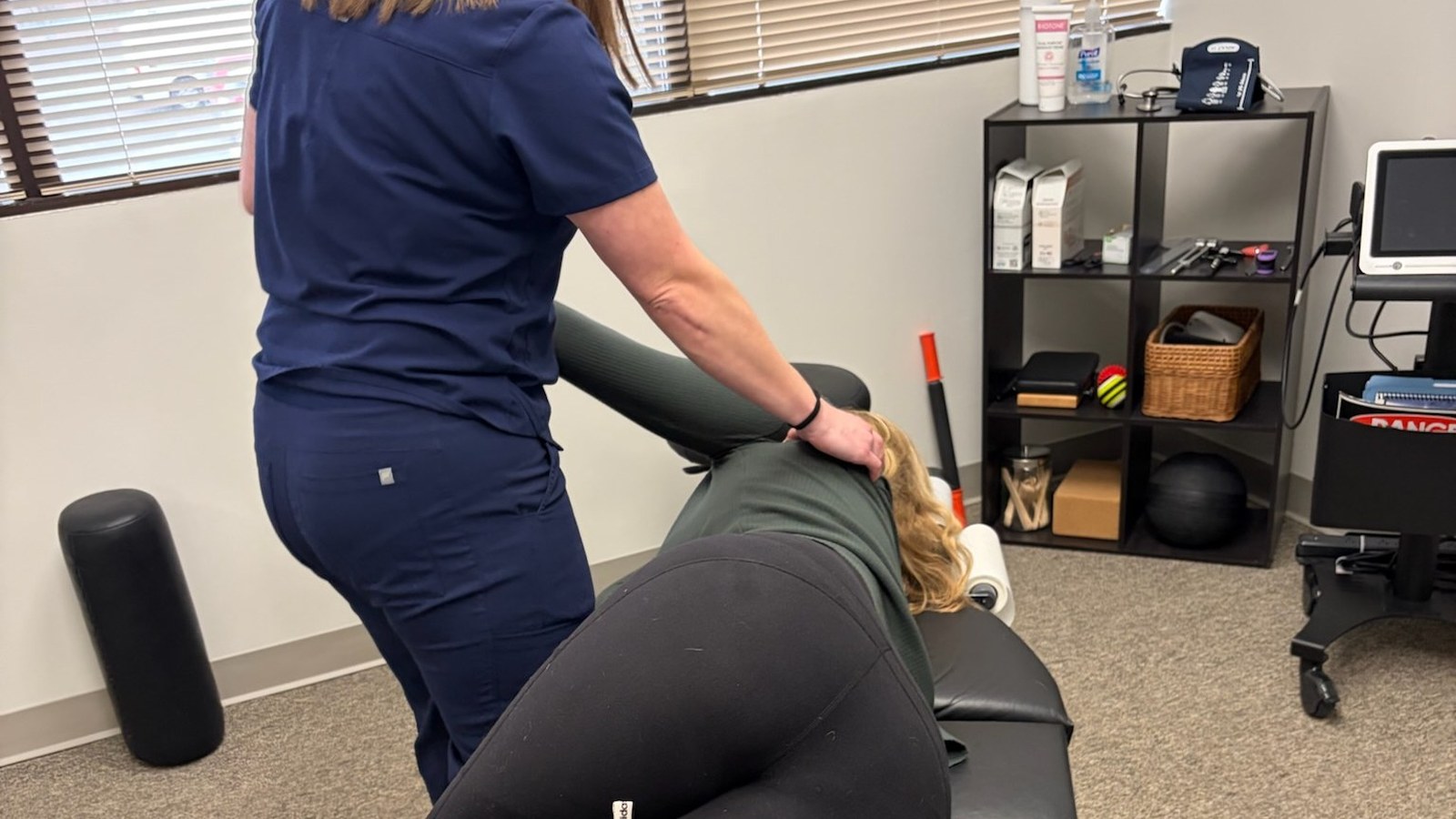
At your New Patient Discovery Assessment in Lombard, we take a history, test how your low back and hips move, check reflexes and strength in your legs, and look at what loads the area day to day. If your findings fit a problem we can care for, the plan may include adjustments chosen for you, rehab to rebuild hip and core stability, and guidance on what to change at home. If your findings do not fit, we refer you out.
If you want the full picture on leg pain, read about sciatica treatment in Lombard. If a disc is the suspect, see whether a herniated disc can heal on its own. For nerve pain that is not in the leg, read how a pinched nerve heals.
What helps while you sort it out
Stay moving within what is comfortable. Short walks usually beat bed rest. Break up long stretches of sitting every 30 minutes, since sitting loads both the disc and the piriformis. Avoid deep stretches that spike the pain down your leg, and back off any activity that sends it past the knee.
When to see a doctor right away
Go to the emergency room if you have numbness in the groin or inner thighs, new trouble controlling your bladder or bowels, or leg weakness that keeps getting worse. Those can signal cauda equina syndrome, which needs urgent care. Also get checked promptly for severe pain that no position eases, fever with back pain, or pain after a fall or accident.
Frequently asked questions
How do you tell if it is sciatica or piriformis syndrome?
Look at the pattern. Pain with bending, coughing, or tingling below the knee points to the spine. Deep buttock pain that worsens with sitting and a sore spot in the buttock points to the piriformis. Only an exam can sort out the overlap.
Can piriformis syndrome cause sciatica?
Yes. When the piriformis muscle tightens or spasms, it can irritate the sciatic nerve and cause sciatica-like pain. It is considered a less common cause than a disc or a narrowed spinal opening, and it is hard to confirm.
What does piriformis pain feel like?
Most people describe a deep ache in the buttock, sometimes with pain down the back of the thigh. It often gets worse after sitting, climbing stairs, or running, and it usually does not come with much low back pain.
Does sciatica go away on its own?
Often it does. Many cases settle over weeks, but timelines vary with the cause. Pain that lingers, keeps returning, or comes with weakness deserves an exam instead of more waiting.
Can a chiropractor help with piriformis syndrome or sciatica?
A chiropractor can assess whether your pain comes from your spine, your hip, or both, and build a plan around how you move. We refer you out when your findings call for a spine specialist or imaging.
Leg or buttock pain that will not settle? Book your New Patient Discovery Assessment and we will find out what is actually going on.
Last updated October 23, 2026 · Dr. Amanda Myers, DC, MS · True Health Chiropractic & Acupuncture, Lombard, IL