
Last updated: August 14, 2026 | Author: Dr. Amanda Myers, DC, MS
You did the stretches. You bought the insoles. It got better. Four months later the first ten minutes of every morning hurt again.
When plantar fasciitis keeps coming back like that, the fascia is not the problem. It is the tissue paying for a problem somewhere else in the chain.
Why does plantar fasciitis keep coming back?
Because rest and stretching settle the irritated tissue without changing the mechanics that overloaded it. A stiff ankle, a weak calf, a hip that will not extend, or a foot that collapses through midstance keeps loading the fascia every step. Pain returns as soon as your activity level does.
Why plantar fasciitis keeps coming back after it feels fixed
That sharp pain in your heel for the first ten minutes after you get out of bed is the classic marker. Overnight the fascia shortens; your first steps load it cold and it protests. It eases as you move, which is exactly why people conclude they are fine and stop doing anything about it.
Then it returns. Plantar fasciitis keeps coming back not because you were unlucky, but because easing pain and fixing mechanics are different things. Pain is the last thing to show up, not the first.
What is actually driving the recurrence?
- Ankle dorsiflexion loss. If your ankle will not bend forward far enough, your foot pronates through midstance to find the range. The fascia takes the strain.
- Calf that cannot absorb load. A weak or short calf complex passes force straight through to the heel. This is the single most under-treated driver.
- Hip extension that stopped working. Sit for eight hours and your hip stops extending. Your foot compensates at the far end of the chain.
- A volume jump. New job on your feet, new running plan, first month back playing. Tissue adapts slower than schedules change.
- Footwear that changed. Summer in flat sandals after a winter in supportive shoes catches a lot of people out.
- Untreated fat pad or nerve involvement. Not everything under a heel is plantar fasciitis, which is why the diagnosis matters.
Why did the usual treatments not hold?
| What you tried | What it did | Why it came back |
|---|---|---|
| Calf and fascia stretching | Temporary length and symptom relief | Did not build the strength to absorb load |
| Off-the-shelf insoles | Some support under the arch | Generic geometry, not matched to your foot or your gait |
| Rest | Let irritation settle | Deconditioned the calf further |
| Night splint | Reduced morning pain | Manages the symptom, changes no mechanics |
| Cortisone injection | Fast pain relief | Relief fades; repeated injections risk fat pad atrophy |
| New running shoes | Different load distribution | Ankle and hip restrictions still there |
What actually breaks the cycle?
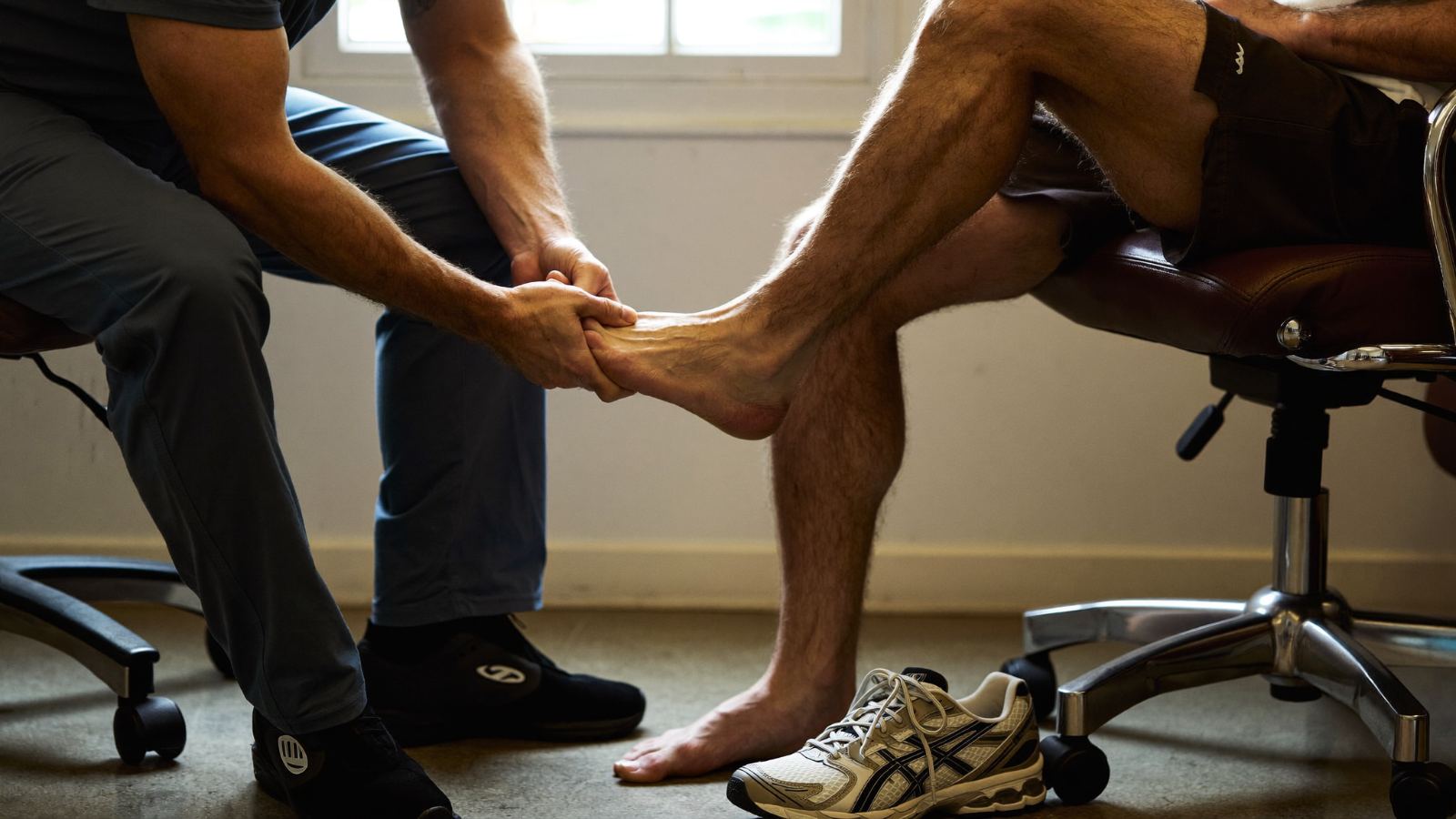
- Find the restriction. Ankle dorsiflexion, big toe extension, calf strength and hip extension get measured, not guessed. The heel is where it hurts, not where it started.
- Restore the motion. Adjustments and soft tissue work through the foot, ankle and up the chain. Where guarding is holding it, massage therapy and chiropractic care together hold better than either alone.
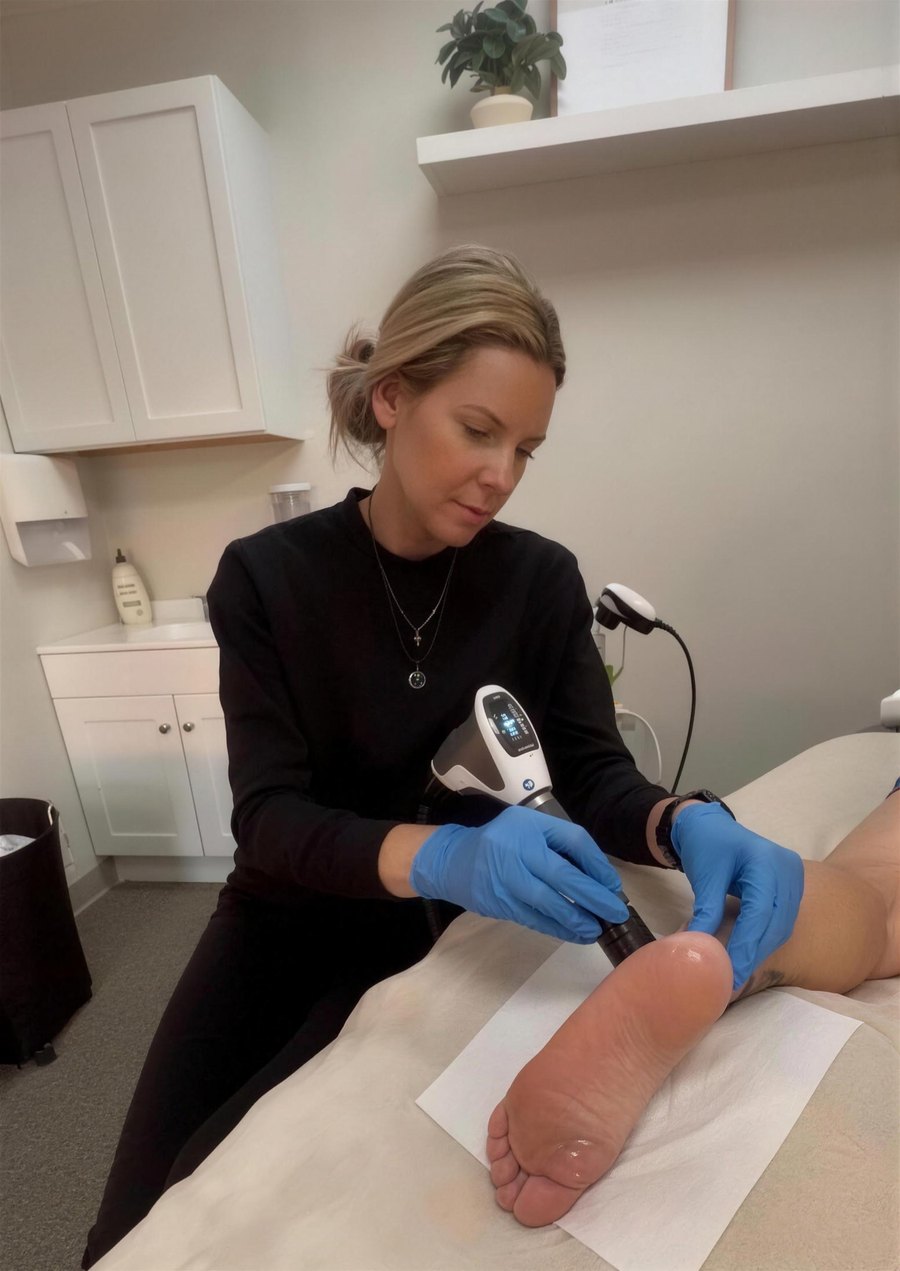
- Restart the repair. For fascia that has been degenerated for months, shockwave therapy for tendon pain provokes the healing response that stalled. Typical courses are covered in how many shockwave therapy sessions you need.
- Rebuild the calf. Progressive heel raises, then loaded, then single leg. This is the part people skip and the reason it recurs.
- Fix the platform. Where foot mechanics are genuinely driving it, custom orthotics made in our Lombard office are matched to your foot rather than pulled off a rack.
How long does it take to stop coming back?
| How long it has been recurring | What we usually find | Honest timeline |
|---|---|---|
| First episode, under 3 months | Irritation with mild mechanical loss | 4–8 weeks |
| Second or third round over 1–2 years | Established calf weakness and ankle restriction | 8–12 weeks |
| Recurring for several years | Degenerated fascia plus compensation up the chain | 12+ weeks, often with shockwave |
If plantar fasciitis keeps coming back on a yearly cycle, that bottom row is usually you. Fascia and tendon remodel slowly. Twelve weeks is not us being cautious, it is the tissue’s timeline.
When should you get your heel pain checked?
Get assessed promptly for heel pain following a specific injury or a pop, numbness or tingling into the foot, pain that is present at rest and at night, a heel that is red, hot or swollen, or an inability to bear weight. Those suggest something other than plantar fasciitis — a fracture, a nerve entrapment, or an inflammatory condition — and need imaging or medical workup, not a stretching routine.
Who this pattern shows up in
Runners increasing mileage. Nurses, teachers, hospitality and warehouse staff on hard floors. People who dropped 20 pounds and started walking daily. And court-sport players — the sudden stops and lateral cuts that drive most pickleball injuries load the fascia hard, especially in players over 50 who added four sessions a week in a single month.
If your heel pain recurs on a predictable cycle, the logic is identical to the reason back pain keeps coming back: the flare gets treated, the driver does not.
We see patients from Lombard, Glen Ellyn, Wheaton, Villa Park, Elmhurst and across DuPage County. Service detail is on our plantar fasciitis treatment page.
Plantar fasciitis that keeps coming back: FAQ
Why does my plantar fasciitis keep coming back after it heals?
Because the pain resolved and the mechanics did not. A stiff ankle, a weak calf or a collapsing arch keeps loading the fascia every step. As soon as your activity returns to normal, so does the load that caused it.
How long does plantar fasciitis take to heal for good?
With the mechanics addressed, most cases settle in 8 to 12 weeks. Long-standing degenerated fascia can take longer and often needs shockwave alongside loading rehab. Pain easing in two weeks is not the same as it being resolved.
Should I stretch or strengthen for plantar fasciitis?
Both, but strengthening is the part that stops recurrence. Stretching gives short-term relief; progressive calf loading builds the capacity to absorb force so the fascia stops being the shock absorber.
Do custom orthotics actually help plantar fasciitis?
They help when foot mechanics are genuinely part of the driver, and they help more when they are made for your foot rather than bought off a shelf. They are a platform, not a cure — the calf work still has to happen.
Is it plantar fasciitis or a heel spur?
Usually the fasciitis. Heel spurs show up on plenty of pain-free feet and are more often a result of long-term traction than the cause of your pain. Treating the spur rarely changes the symptoms.
Can I keep running or playing with plantar fasciitis?
Often yes, with the volume managed and the loading rehab running. Complete rest deconditions the calf and tends to lengthen the whole thing. What changes is how much and how often, not whether.
Book your New Patient Discovery Assessment
If this is your second or third round with the same heel, stretching harder is not the missing piece. Let’s find what is actually loading it. Book your New Patient Discovery Assessment at True Health Chiropractic and Acupuncture in Lombard.
4 Responses