
Last updated: August 14, 2026 | Author: Dr. Amanda Myers, DC, MS
Most people meet acupuncture as a standalone thing. You go somewhere quiet, you get needled, you feel better for a while, you go back. Nothing in that loop is fixing why you needed it.
We use acupuncture and chiropractic together for a narrower reason: pain and muscle guarding are often what stop a correction from holding, and needles are very good at turning both down long enough for the mechanical work to land.
Does acupuncture work with chiropractic care?
Yes, and they target different problems. Chiropractic restores joint motion and corrects the mechanical fault. Acupuncture reduces the pain and muscle guarding wrapped around it. Used together, patients tolerate more rehab load sooner, which is usually what decides whether a correction holds or keeps sliding back.
Why do adjustments sometimes stall?
You get adjusted. The joint moves better. Then the pain flares that night and you spend three days protecting it — which is exactly the guarding pattern we were trying to break.
Pain is not just an output. It is an input. A nervous system that is running hot keeps recruiting the muscles around a joint whether or not that joint still needs protecting. Your body is compensating, and it will keep compensating until something interrupts the signal.
That is the specific gap acupuncture and chiropractic together are meant to close. Not relaxation. Not energy. A tolerance problem.
What does acupuncture actually change?
- Pain signalling. Needling modulates how the area reports to your nervous system. The National Center for Complementary and Integrative Health reports reasonable evidence for chronic low back pain, neck pain, knee osteoarthritis and tension headache.
- Muscle tone. Dry-needling-style work into a taut band reduces the trigger point that keeps dragging a joint out of position.
- Local circulation. Blood flow to a specific area increases, which matters most for tissue that has been quietly under-perfused for years.
- Sleep and stress load. Underrated. Patients who sleep better recover faster, and recovery is where the correction actually consolidates.
What it does not do: restore joint motion. It cannot. That is a mechanical problem and it needs a mechanical fix.
Acupuncture and chiropractic together: what each one does
| Chiropractic adjustment | Acupuncture | |
|---|---|---|
| What it targets | Joint motion and mechanics | Pain signalling and muscle tone |
| Main job in the plan | Correct the fault | Make the correction tolerable and durable |
| When you feel it | Often immediately | Usually 2–4 sessions in |
| What it cannot do | Calm a nervous system running hot | Restore a joint that will not move |
| Used together | You tolerate more rehab load sooner, so the correction holds | |
What do we combine them for?
Not everything. The cases where we most often run acupuncture and chiropractic together:
- Pain that outlives the injury. The tissue healed months ago and it still hurts. This is a signalling problem, not a damage problem.
- Recurring low back pain. Especially when back pain keeps coming back in the same spot after every round of care.
- Headaches driven from the neck. Worth first working out migraine vs headache, because the plans differ.
- Stubborn tendon pain. Often paired with shockwave therapy for tendon pain rather than used instead of it.
- Athletes mid-season. When someone is loading the tissue faster than it recovers — the same pattern behind most pickleball injuries.
- Patients who cannot tolerate hands-on work yet. Sometimes needles come first so the adjustment is possible at all.
How many acupuncture sessions will you need?
Honest ranges, assuming acupuncture is running alongside adjustments and rehab rather than on its own:
| Situation | Typical frequency | When to reassess |
|---|---|---|
| Acute flare | 1–2x per week | 3 weeks |
| Recurring pain, 6–24 months | Weekly, tapering | 6 weeks |
| Chronic pain, multiple years | Weekly for 4–6, then every 2–3 weeks | 8–12 weeks |
If you are six sessions in and nothing has shifted, that is information. We change the plan rather than sell you more of it.
Does acupuncture hurt?
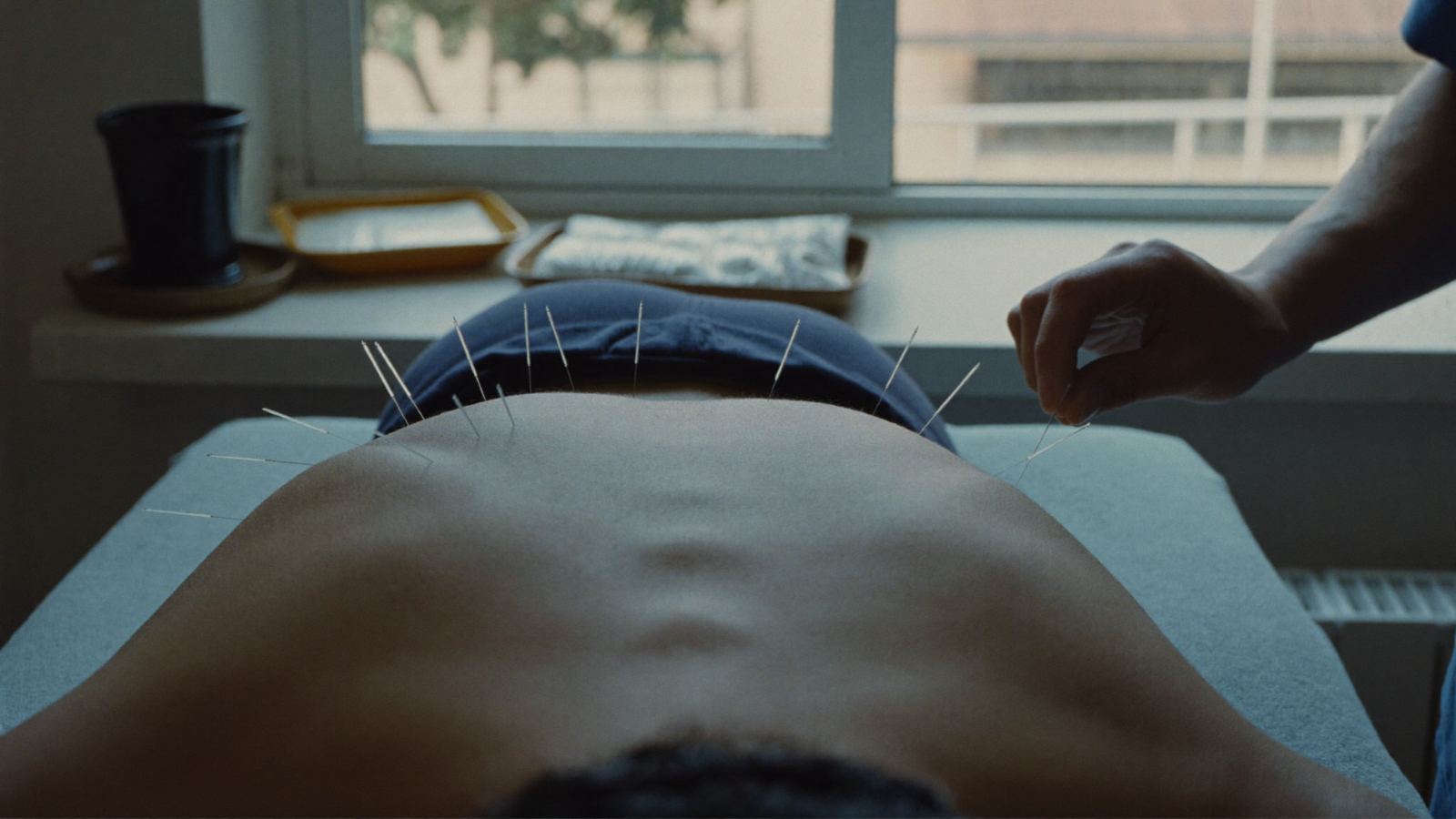
The needles are about the thickness of a human hair — nothing like an injection needle. Most people feel a brief pinch on insertion and then a dull heaviness or warmth around the point, which is the response we want. A few areas are more sensitive, and we adjust.
Mild soreness or a bruise afterward happens occasionally. Feeling drained or unusually relaxed for a few hours is common and normal. Anything sharp or radiating during treatment is not, and you should say so immediately.
What does a combined visit look like in our Lombard office?
Assessment first, always. We work out what is mechanical, what is soft tissue, and what is pain sensitivity, because those three need different tools. From there a visit typically runs needles first to bring the area down, then the adjustment, then the rehab that teaches the new pattern to stay. Some plans add massage therapy and chiropractic care in the same block, or standalone acupuncture between adjustment visits.
We see patients from Lombard, Glen Ellyn, Wheaton, Villa Park, Elmhurst and across DuPage County.
Acupuncture and chiropractic together FAQ
Can you get acupuncture and a chiropractic adjustment on the same day?
Yes, and same visit is usually better than same day. Needling first reduces the guarding, so the adjustment moves the joint further with less force. There is no reason to space them out.
Which should come first, acupuncture or the adjustment?
Acupuncture first in most cases, for the reason above. The exception is when pain is clearly coming from a locked joint rather than from sensitised tissue, in which case restoring motion first makes the needling more useful.
Is acupuncture safe alongside chiropractic care?
For most people, yes, when performed by a licensed practitioner using sterile single-use needles. Tell us if you are on blood thinners, pregnant, have a pacemaker, or have a bleeding disorder, because those change where and how we needle.
How is this different from dry needling?
The needles are similar. The reasoning differs — dry needling targets a specific taut band or trigger point, while acupuncture works from a broader point framework. In practice we use whichever addresses what your assessment found.
Does acupuncture help with sciatica?
It can reduce the pain and guarding, which often makes movement possible again. It does not decompress a nerve root. If that is what is driving your symptoms, the plan needs a mechanical component too.
Will insurance cover acupuncture?
It depends on the plan and often on the diagnosis. We verify your benefits before your first visit so the cost is known in advance rather than after.
Book your New Patient Discovery Assessment
If pain is the reason you cannot do the work that would actually fix this, that is the problem worth solving first. Book your New Patient Discovery Assessment at True Health Chiropractic and Acupuncture in Lombard.
5 Responses