
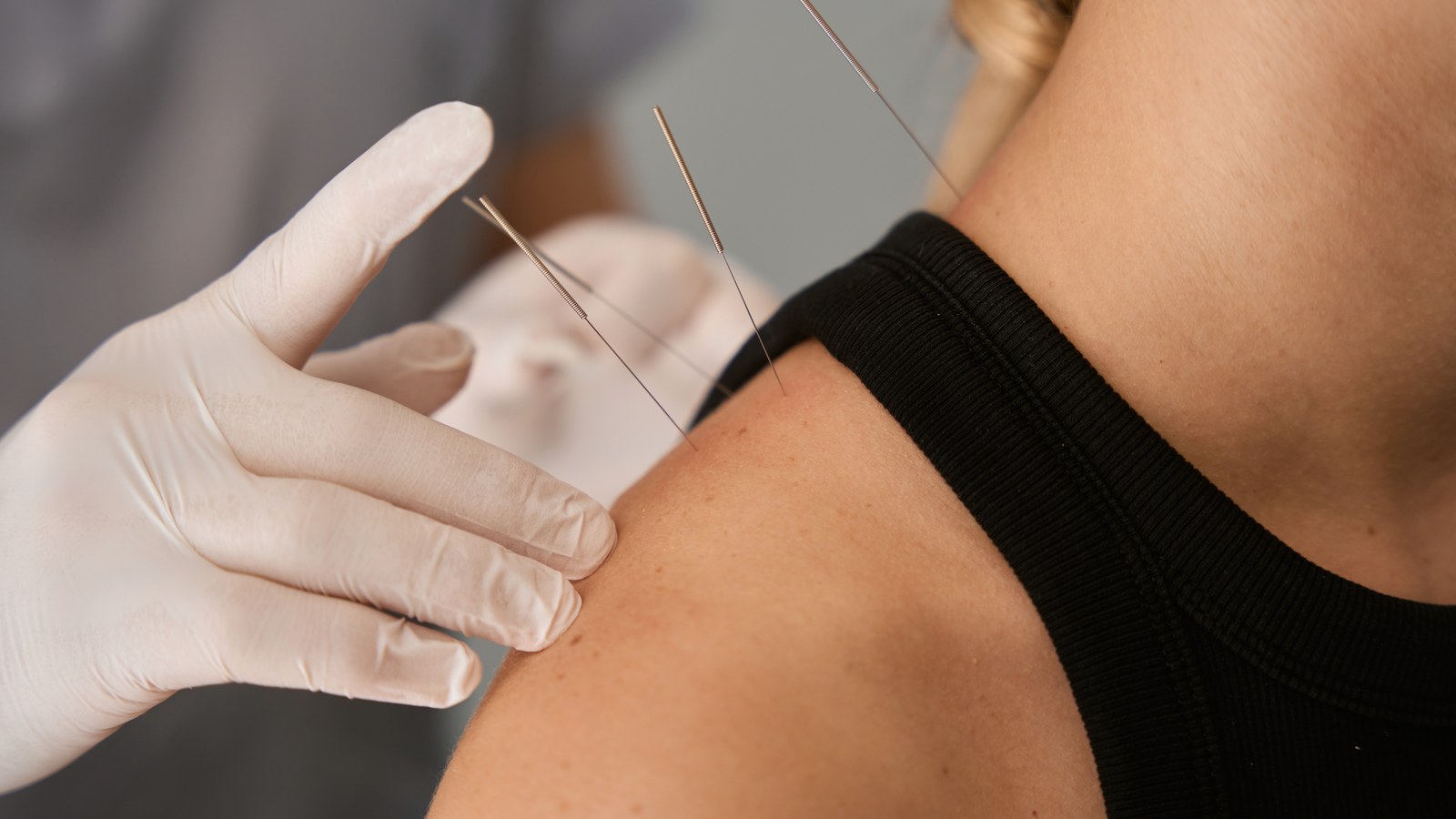
Dry needling vs acupuncture usually becomes a real question the same way: a knot in your shoulder will not let go. One provider says dry needling. A friend swears by acupuncture. You look up both and the photos look identical — thin needles, calm patient, someone talking about trigger points. So which one do you actually need?
The short answer: dry needling and acupuncture use the same thin, sterile needles — the difference is the reasoning. Dry needling targets a specific taut band of muscle, called a trigger point, to make it release. Acupuncture works from a broader point framework to calm pain and settle your nervous system. At True Health in Lombard, we use both.
Dry needling vs acupuncture: the 5 differences at a glance
| Difference | Dry needling | Acupuncture |
|---|---|---|
| The target | One specific trigger point — the taut, tender band in a muscle | A framework of points chosen for your whole pain pattern |
| The goal | Make that muscle release, often with a brief twitch | Calm the nervous system and turn down pain signaling |
| What it feels like | A deep ache, sometimes a twitch, then looseness | Most needles you barely feel; many patients doze off |
| Needle depth | Usually deeper — into the belly of the muscle | Varies; many points are shallow |
| Best first fit | A stubborn knot or a muscle that keeps guarding | Widespread pain, stress-loaded pain, headaches |
What dry needling actually does
A trigger point is not random. It is a section of muscle that has been guarding — usually for months — because of how you move, sit, or compensate around an old problem. The fibers stay contracted, blood flow drops, and the spot becomes tender and tight.
Dry needling puts a thin needle directly into that band. Often the muscle answers with a quick twitch, then lets go. You may feel sore for a day or two afterward, the way you do after a hard workout. A published review in Physical Therapy Reviews supports dry needling for short-term relief of muscle-based pain and improved range of motion.
Here is the part most clinics skip: if we release the knot and ignore the reason it formed, it comes back. That is why dry needling at our office is paired with finding the movement problem underneath — not used as the whole plan.
What acupuncture actually does
Acupuncture is older and broader. Instead of chasing one taut band, it works from a mapped framework of points to regulate how your nervous system processes pain. Research is strongest for chronic pain, tension headaches, and stress-loaded symptoms — the problems that flare when life does.
Most patients are surprised by how little they feel. The needles are hair-thin, and a typical visit ends with people more relaxed than when they walked in. If you have read about pairing acupuncture with chiropractic care, this is the same tool doing that work.
Which one is right for you?
You should not have to pick the right needle therapy before you walk in the door. That is our job.
In a New Patient Discovery Assessment at our Lombard office, we look at how you move, where you are compensating, and what is actually driving the pain. A single stubborn knot points one way. A pain pattern that spreads, flares with stress, or comes with headaches points the other. Plenty of people need a few of each — dry needling to release the muscle, acupuncture to settle the system that keeps tightening it. Tendon pain that has not responded to either is often a fit for shockwave therapy instead.
Because dry needling and acupuncture in Lombard are both done in-house at True Health, the answer to “which one” never changes where you start: with an assessment that finds the cause.
When to see a doctor first
Needle therapy is not the right first stop for everything. If your pain comes with spreading numbness or weakness, fever, unexplained weight loss, or follows a hard fall or car accident, get a medical evaluation first. When an assessment turns up something that is not a muscle or movement problem, we refer out — that is part of doing this the right way.
Frequently asked questions
Does dry needling go deeper than acupuncture?
Usually, yes. Dry needling targets the belly of the muscle where the trigger point sits, so the needle often goes deeper. Many acupuncture points are shallow, which is one reason acupuncture visits feel gentler.
Does dry needling really work?
For muscle-based pain, research supports short-term pain relief and better range of motion. The honest caveat: evidence for lasting results from dry needling alone is mixed. It works best as one tool inside a plan that also fixes why the trigger point formed.
Are there any negatives to dry needling?
Soreness for 24–48 hours is common, and a small bruise can show up at the needle site. Serious complications are rare with a licensed, trained provider using sterile single-use needles — which is the only way it is done here.
Who should not get dry needling?
Tell us if you are on blood thinners, are pregnant, have a pacemaker, a bleeding disorder, or a strong needle aversion — those change where and how we needle, or point us to a different tool. Your assessment covers all of this before anyone picks up a needle.
Dry needling vs acupuncture: which hurts more?
Dry needling, usually. The twitch response feels like a deep, quick cramp, and the area can ache afterward. Acupuncture needles are mostly not felt at all. Neither should ever feel like something you have to grit your teeth through.
Ready to stop guessing which therapy you need? Book your New Patient Discovery Assessment and we will find what is actually going on first.
Last updated October 1, 2026 · Dr. Amanda Myers, DC, MS · True Health Chiropractic & Acupuncture, Lombard, IL
One Response