
You walked away from the fender bender feeling fine. A few days later your neck will not turn when you check your blind spot, and a headache is settling in at the base of your skull. That delay is not in your head — it is how whiplash usually works.
The short answer: delayed whiplash symptoms typically show up 24 to 72 hours after a crash, and sometimes later. Adrenaline masks pain at first, then inflammation builds in the injured muscles and ligaments. The most common signs are neck stiffness, headaches at the base of the skull, shoulder and upper back pain, and dizziness.
Delayed whiplash symptoms: what shows up and when
| Timing | What you may notice | What is going on |
|---|---|---|
| First hours | Often nothing, or mild soreness | Adrenaline is blocking pain signals |
| Day 1–3 | Neck stiffness, reduced turning, headache at the skull base | Inflammation builds in strained muscles and ligaments |
| Day 3–7 | Shoulder and upper back tightness, jaw soreness, trouble sleeping | Surrounding muscles tighten to protect the neck |
| Week 2 and beyond | Lingering stiffness, tingling in the arm, fatigue, brain fog | Guarded movement patterns, and sometimes an irritated nerve |
Why whiplash waits to announce itself
Whiplash is a soft-tissue injury. Your head is thrown forward and back faster than your neck muscles can brace, and the small ligaments and muscles around the cervical spine get overstretched. In the moment, your body floods with adrenaline, and that works like a painkiller.
Once it wears off, the tissue does what any strained tissue does: it swells and tightens. Mayo Clinic notes that whiplash symptoms usually develop within days of the injury, not minutes. Meanwhile your muscles lock down to protect the area, which is why turning your head gets harder on day three than it was on day one.
Delayed whiplash symptoms worth getting examined
You do not need to wait for severe pain. If you notice any of these delayed whiplash symptoms, these are good reasons to book an exam sooner rather than later:
- Neck pain or stiffness that is getting worse, not better, after the first few days
- Headaches that start at the base of the skull and creep toward your forehead (our guide to migraine vs headache can help you tell patterns apart)
- Shoulder or upper back pain you did not have before the accident
- Dizziness, jaw soreness, or trouble sleeping
- Tingling or numbness that travels down an arm. That can point to an irritated nerve, and we explain how to sort it out in our post on a pinched nerve in the neck vs upper back
What a whiplash exam looks like at True Health
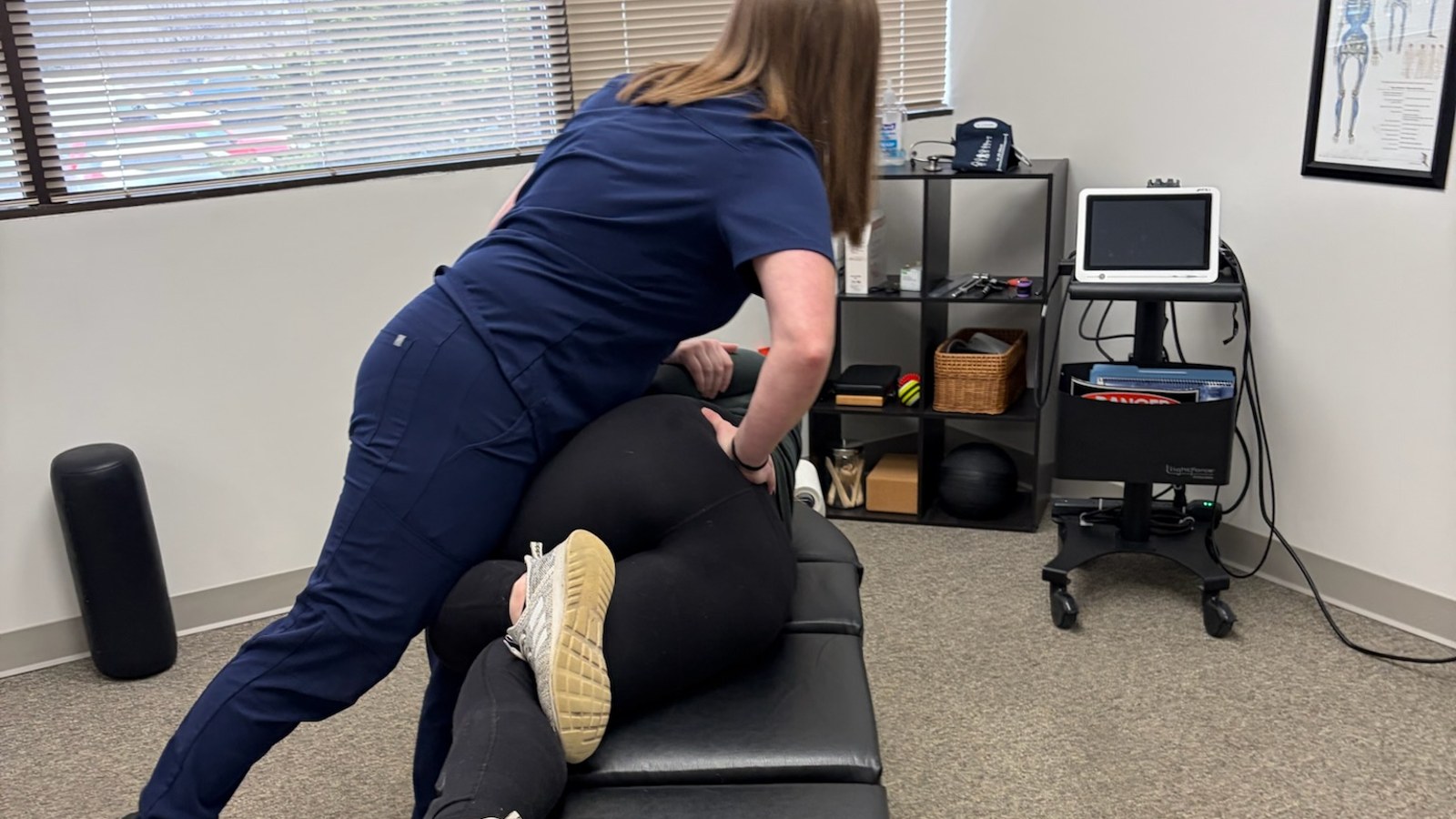
If you are searching for a chiropractor for whiplash in Lombard, here is what to expect. You should not have to guess whether what you feel is normal soreness or an injury that needs attention. At our Lombard office, the New Patient Discovery Assessment starts with your history: how the crash happened, where you were hit, and when symptoms began. Then we test how your neck and upper back actually move, check for nerve involvement, and decide whether you are a fit for chiropractic care at all.
If you are, care is gentle and matched to where you are in healing. Early on that usually means restoring motion gradually rather than forcing it, plus guidance on what to do and avoid at home. Research on whiplash recovery generally favors early, guided movement over long rest or a collar. If your exam finds something outside our scope, we refer you to the right provider. For the bigger picture on timing, read when to see a chiropractor after a car accident, or see how we handle auto accident care in Lombard and our neck pain treatment.
When to go to the ER or your doctor first
Get emergency care right away if you have severe neck pain after a crash, weakness or numbness in your arms or legs, loss of bladder or bowel control, confusion, repeated vomiting, or a headache that is the worst of your life. Those are not chiropractic problems, and we will say so.
Frequently asked questions
How long after a car accident can whiplash symptoms appear?
Most people notice symptoms within 24 to 72 hours, but some feel them later, even a week or more after the crash. If you were hit and feel fine, watch your neck and head over the next several days rather than assuming you are in the clear.
When should I be concerned about a neck injury?
Be concerned right away if you have numbness, weakness, severe pain, confusion, or loss of bladder or bowel control. Pain that keeps worsening, or does not ease after a week, deserves a proper exam even if it feels manageable.
How to treat long term whiplash?
Persistent whiplash, including delayed whiplash symptoms that linger, usually needs a plan built on what the exam finds: restoring joint and muscle motion, strengthening the deep neck muscles, and fixing the movement habits that kept it going. Rest alone rarely does it. We track your progress with re-tests and tell you plainly whether you are responding.
What are the symptoms of a torn ligament in the neck?
Severe neck pain, a feeling that your head is unstable, and pain that is worse with movement can point to more than a strain. Only a medical exam and imaging can tell, so do not guess. If you have these signs, see a medical doctor before any hands-on care.
Feeling that delayed stiffness and not sure what it means? Book your New Patient Discovery Assessment and we will find out what is going on with your neck.
Last updated October 8, 2026 · Dr. Amanda Myers, DC, MS · True Health Chiropractic & Acupuncture, Lombard, IL