
By Dr. Amanda Myers, DC, MS · Last updated September 24, 2026
The crash itself takes about three seconds. Then come the photos, the tow truck, the insurance calls — and a question you keep turning over: am I actually hurt?
You feel mostly fine. A little rattled, a little stiff. So you wait. And somewhere between day two and day five, your neck locks up, a headache starts at the base of your skull, and checking your blind spot suddenly costs you something.
That is not bad luck. It is the most predictable pattern in crash injuries — and it is exactly why the wait-and-see plan fails people.
Yes — you should see a chiropractor after a car accident, ideally within 72 hours, even if you feel fine. Whiplash and other soft-tissue injuries commonly stay silent for 24 to 72 hours while adrenaline masks symptoms. An early exam rules out red flags, documents the injury for your claim, and starts care before compensation patterns set in. Emergencies go to the ER first.
Why “I feel fine” does not settle it
A collision loads your neck and back faster than your muscles can brace — even at parking-lot speeds. The injury happens in milliseconds. The pain usually does not.
Right after impact your body is running on adrenaline, which blunts pain on purpose. As that chemistry fades over the next one to three days, the inflammation underneath starts reporting in. Mayo Clinic notes that whiplash symptoms usually develop within days of the injury — not minutes. Stiff neck, headaches that start at the skull, shoulder or upper back pain, dizziness, fatigue.
Feeling fine on day one tells you almost nothing about day five. An exam does.
When to see a chiropractor after a car accident
The window we care about is 72 hours. Not because day four is too late to get better — it is not — but because the first few days decide two things.
First, your body starts protecting the injured area immediately. Muscles guard, joints stiffen, and you start moving differently without noticing. The longer those compensation patterns run, the more there is to unwind later. Research on whiplash recovery consistently favors early, guided movement over rest and a collar.
Second, documentation. In an injury claim, the gap between the crash and your first exam is one of the first things an insurer looks at. A same-week exam creates a clean record connecting the crash to the injury. A three-week gap invites the argument that something else caused it.
One decision covers both: get examined within 72 hours — by your physician, urgent care, or a chiropractor after a car accident. The worst option is nobody.
ER, urgent care, or chiropractor: where do you go first?
These are not competing options. They answer different questions — and seeing a chiropractor after a car accident is the step that usually gets skipped, not the ER.
| Emergency room | Urgent care | Chiropractic exam | |
|---|---|---|---|
| The right call when | Red flags: loss of consciousness, numbness or weakness in an arm or leg, severe headache, chest or abdominal pain, confusion | You want same-day X-rays or stitches and your own doctor cannot see you | Emergencies are ruled out — or you feel “mostly fine” — and you want the injury itself assessed |
| The question it answers | Is anything life-threatening? | Is anything broken or urgent? | What did the crash do to your spine, joints, and soft tissue — and what is the plan? |
| What it can miss | Soft-tissue and joint injuries that image clean | The same — a normal X-ray does not mean normal function | Emergencies — which is why red flags go to the ER first, every time |
| What happens next | Discharge, pain medication, “follow up with someone” | Rest, medication, “see your doctor if it persists” | A specific plan: adjustment, rehab, and re-testing as tissue heals |
We hear the same story constantly: the ER said nothing was broken, handed over a prescription, and that was the end of the plan. “Nothing is broken” is a relief. It is not a diagnosis of what is actually going on in your neck or back.
What the exam looks like at True Health
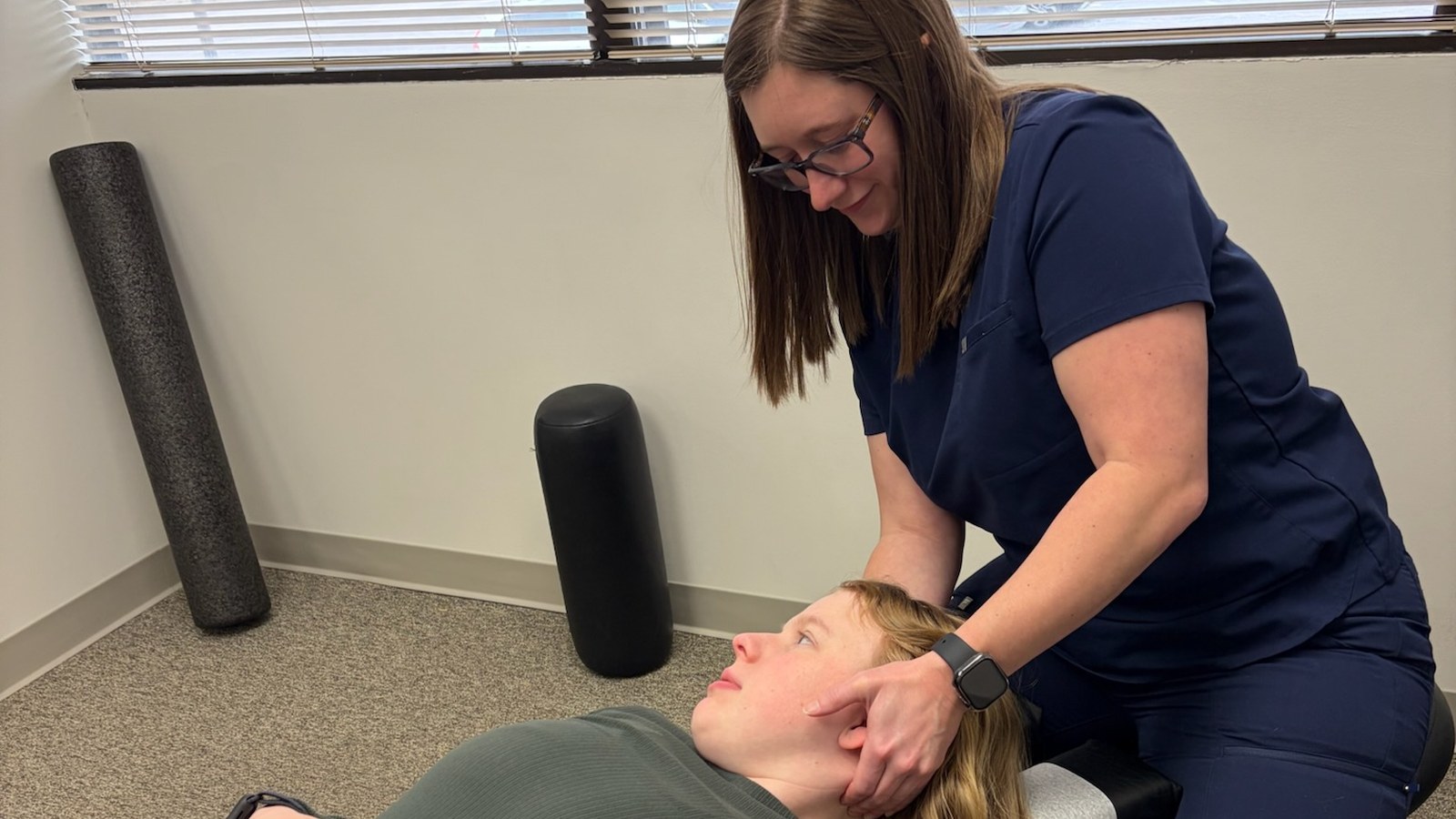
A post-accident visit in our Lombard office starts as an assessment, not an adjustment. We go through the crash itself — direction of impact, headrest position, whether you saw it coming — because the mechanics predict the injury pattern. Then orthopedic and neurological testing, range of motion, and a hands-on exam of the spine and the tissue around it. If anything warrants imaging or a medical specialist, we refer out and say so on day one.
Then you get a plan, not a guess: specific adjustments to restore joint motion, rehab to rebuild stability so the injury does not harden into a chronic problem, and honest re-testing along the way. If your main symptom is a pinched-nerve pattern in the neck or upper back or headaches that start in the neck, the exam sorts that out too. Every finding is documented — which matters for your recovery and your claim.
The insurance question, briefly
Illinois is an at-fault state, and seeing a chiropractor after a car accident is usually billed differently than everyday care. Crash care is typically billed through the auto claim — the at-fault driver’s liability coverage, your own medical-payments coverage if you carry it, or through an attorney when one is involved — rather than starting with your health insurance. We handle the documentation and coordinate with your attorney when there is one. The full breakdown is on our auto accident chiropractic page.
How soon after a car accident should I see a chiropractor?
Within 72 hours is the goal, even with mild or no symptoms. That window matters for catching delayed-onset injuries early, before compensation patterns set in, and it creates a clear medical record connecting the crash to the injury. If red flags are present, the ER comes first.
Should I see a chiropractor after a car accident if I feel fine?
Yes — get examined anyway. Adrenaline and stress hormones can mask crash injuries for one to three days, and feeling fine at the scene is not evidence that your spine and soft tissue came through clean. A short exam either clears you or catches a problem while it is still simple.
Why does pain show up days after a car accident?
Because the chemistry of the crash hides it. Adrenaline blunts pain, and inflammation in strained muscles, ligaments, and joints builds gradually over 24 to 72 hours. That is why a neck that felt fine on Tuesday can barely turn by Friday.
How long does chiropractic treatment take after a car accident?
It depends on what the exam finds — mild strains may need a few weeks of care, while significant whiplash injuries are often reassessed across two to three months. We re-test as you go and tell you plainly whether you are responding. Injuries that took a violent split second to happen do not need to run your life, but they do heal on tissue time, not calendar wishes.
Does insurance cover a chiropractor after a car accident in Illinois?
In most cases, yes — through the at-fault driver’s liability coverage, your own medical-payments (MedPay) coverage, or an attorney lien while your claim resolves. Every case is different, so bring your claim information to the first visit and we will walk through it with you before care starts.
If you were in a crash this week — on I-355, Butterfield Road, or a parking lot in between — do not let “I’ll see how it feels” make the decision for you. There is a reason accident pain shows up late, and an exam now beats an explanation later. Learn how we handle auto accident care at True Health in Lombard, then Book your New Patient Discovery Assessment and let’s find out what is actually going on.