
You got the MRI. The report says “herniated disc,” and now your back or leg hurts every time you sit, bend, or sleep wrong. The first question nearly everyone asks: can a herniated disc heal on its own, or is surgery coming?
The short answer: often, yes. Many herniated discs shrink on their own as the body absorbs the material pressing on a nerve. A 2015 systematic review found spontaneous regression in 96% of sequestered, 70% of extruded, and 41% of protruded discs. Pain usually eases before the MRI changes.
How often does a herniated disc heal on its own?
The disc is not “put back.” The leaked inner material is treated like a foreign object, and your immune system gradually clears it. That is why the largest herniations tend to shrink the most. The numbers below come from a systematic review in Clinical Rehabilitation (Chiu et al., 2015) that pooled MRI follow-up studies of the lumbar spine.
| Type of disc problem | What it means | Shrank on its own |
|---|---|---|
| Bulging disc | Disc pushes out evenly, outer wall intact | 13% |
| Protrusion | Inner material pushes through a weak spot | 41% |
| Extrusion | Material breaks through and spills past the disc | 70% |
| Sequestration | A fragment separates from the disc | 96% |
Your MRI is not the whole story. Plenty of people with a herniated disc on imaging have no pain, and plenty of people in pain have a disc that looks mild. Reading the picture without examining how you move is how people end up over-treated or under-treated.
How long does a herniated disc take to heal?
Timelines vary, and anyone who gives you one number is guessing. Many people notice real improvement within several weeks. For others it takes a few months. The disc itself can keep shrinking on imaging for months after the pain calms down. If something takes 12 weeks, we will say 12 weeks.
What slows recovery is usually not the disc. It is the pattern around it: a stiff hip, a locked mid-back, or weak core muscles that make your lower spine absorb every bend and lift. Your body is compensating. Pain is the last thing to show up, not the first, and the disc was often loaded for months before it gave way.
Where a chiropractor for a herniated disc fits
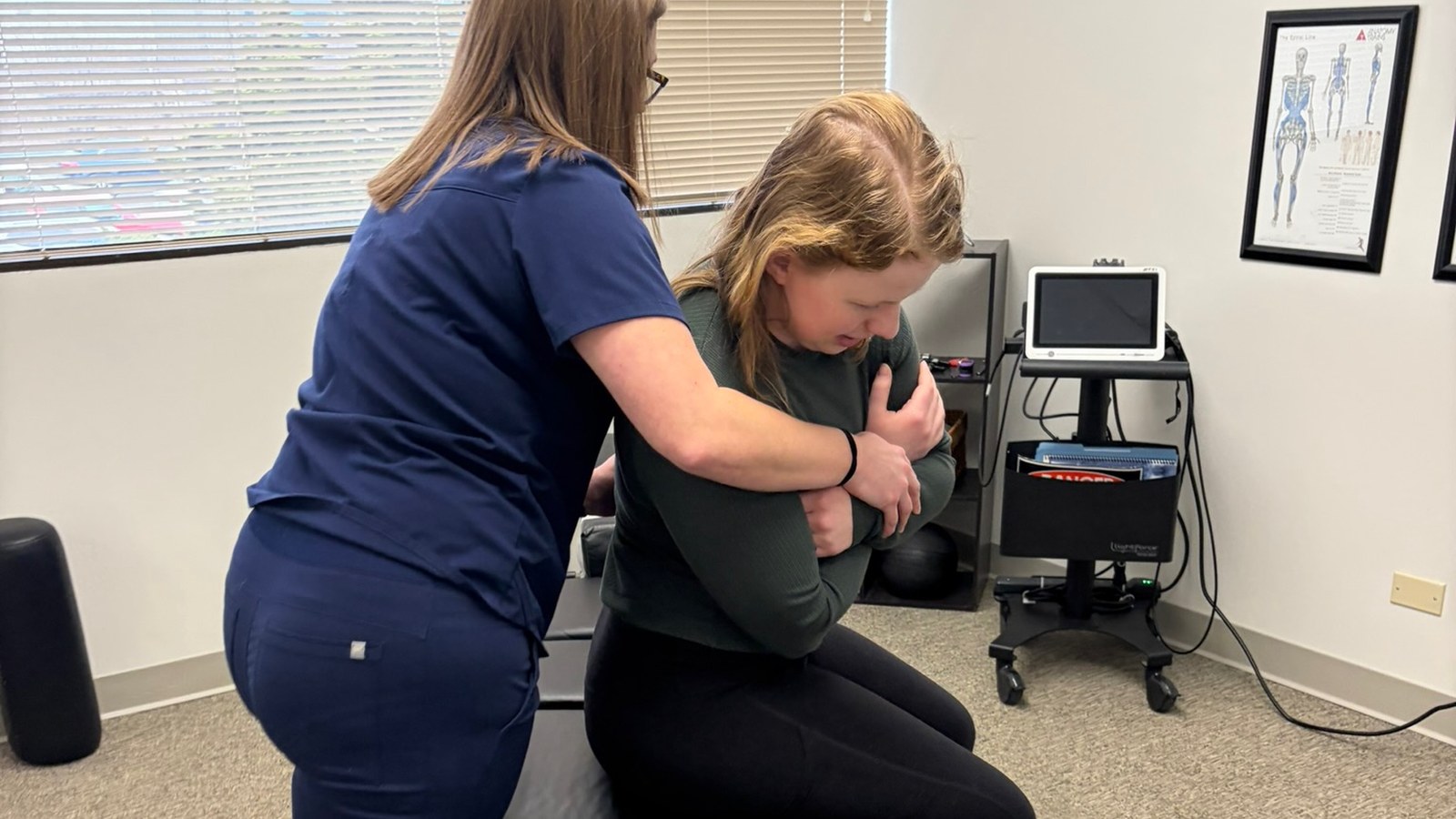
A chiropractor does not make a disc “go back in.” What we can do is find out what is actually going on, then build a plan around it. At your New Patient Discovery Assessment in Lombard we take a history, test how your spine and hips move, and check nerve function in your legs. If your findings fit a disc problem we can care for, the plan may include adjustments chosen to suit your presentation, rehab to rebuild stability, and guidance on what to do and avoid at home. If your findings do not fit, we refer you out.
That last part matters. Some disc problems need a spine specialist, an injection, or surgery, and the sooner you know, the better. We work with the care you already have and will not hold you in our office when you need someone else.
If leg pain is the main complaint, read about sciatica treatment in Lombard and how a pinched nerve heals on its own. If the pain keeps returning, see why back pain keeps coming back and what a back pain treatment plan looks like. For the big picture, visit our chronic pain treatment page.
What helps while it heals
Stay moving within what is comfortable. Short walks usually beat bed rest. Avoid long stretches of sitting, heavy lifting, and repeated bending with a rounded back until your symptoms settle. Change position often and sleep in a posture that keeps your spine neutral. If an activity sends pain down your leg, back off and tell your provider.
When to see a doctor right away
Go to the emergency room if you have numbness in the groin or inner thighs, new trouble controlling your bladder or bowels, or leg weakness that is getting worse. Those can signal cauda equina syndrome, which needs urgent surgical care. Also get checked promptly for severe pain that does not ease with any position, fever with back pain, or pain after a fall or accident.
Frequently asked questions
Can a herniated disc heal on its own without surgery?
Yes, often. Many herniated discs shrink as the body absorbs the leaked material, and most people do not need surgery. A 2015 review found regression in 41% to 96% of discs depending on type. Surgery is usually reserved for severe or worsening nerve symptoms.
How long does it take for a herniated disc to heal on its own?
Many people feel meaningfully better within several weeks to a few months. The disc can keep shrinking on imaging after the pain calms down. Your timeline depends on the type of herniation and how your spine is moving.
What is the best treatment for a herniated disc?
There is no single best option. Most plans start with staying active, reducing what aggravates it, and targeted rehab, with chiropractic care, medication, or injections added based on your exam. A specialist referral makes sense if nerve symptoms worsen.
Should I rest or keep moving with a herniated disc?
Keep moving within what is comfortable. Long bed rest tends to slow recovery. Avoid heavy lifting and long periods of sitting until the pain settles.
Can a chiropractor help a herniated disc?
A chiropractor can assess whether your pain fits a disc problem and build a plan around how your spine moves. We do not push a disc back into place. We refer you out when your findings call for a spine specialist.
Back or leg pain that will not settle? Book your New Patient Discovery Assessment and we will find out what is actually going on.
Last updated October 20, 2026 · Dr. Amanda Myers, DC, MS · True Health Chiropractic & Acupuncture, Lombard, IL
One Response